
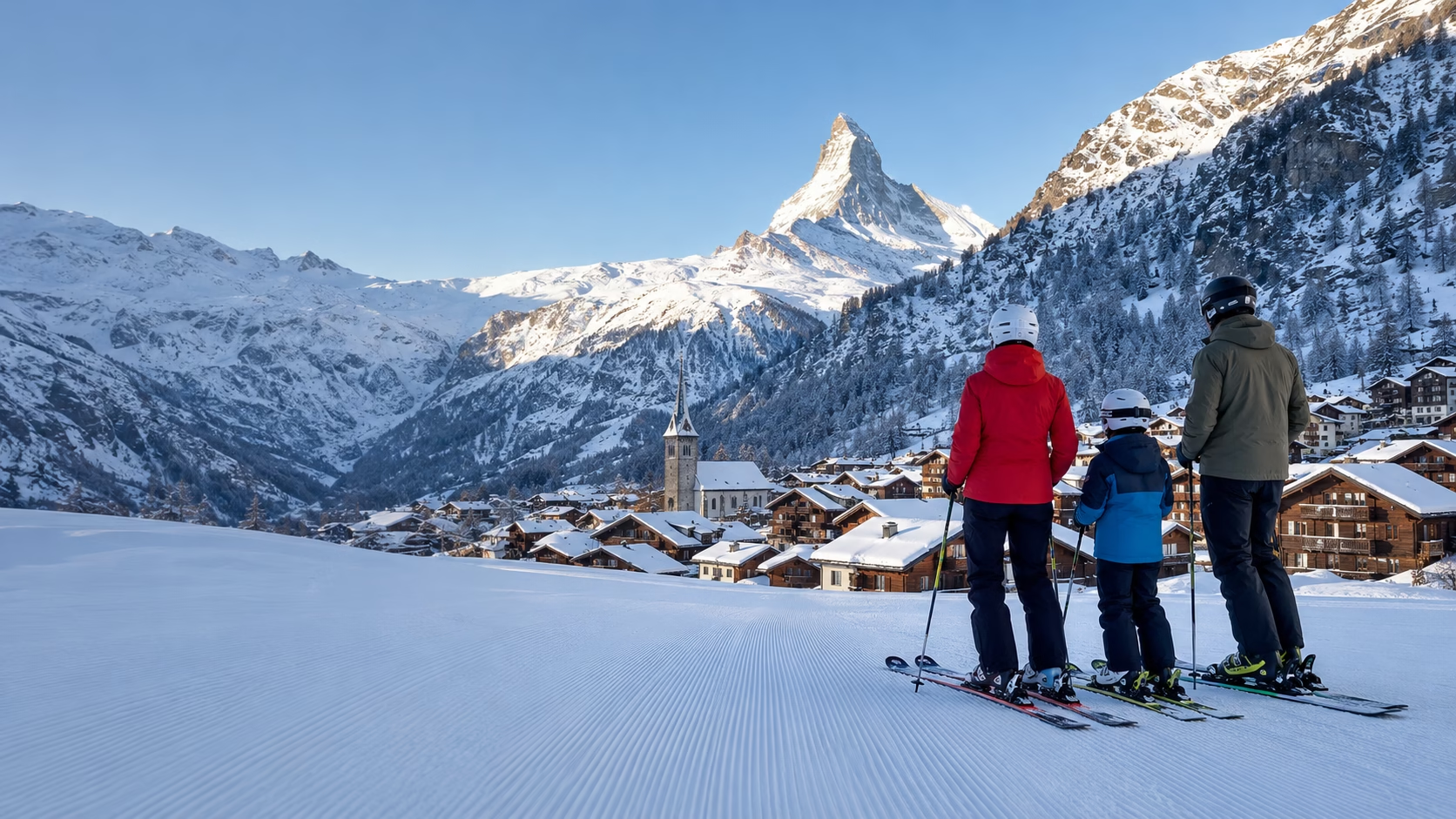
04 European ski destinations · Switzerland
Ski Travel Insurance for SwitzerlandPlan for the route, resort and rescue
Ski travel insurance for Switzerland should match the complete Alpine journey, the exact winter activity and the contract conditions that apply before, during and after a mountain incident.
Ski travel insurance for Switzerland is not one automatic benefit. It is a contract that must reflect your true departure country, complete route, full travel dates, every insured traveller and the skiing or snowboarding you genuinely plan to do.
A Swiss ski holiday can involve a direct arrival in Zurich or Geneva, a cross-border gateway in France or Italy, rail connections, rented equipment and mountain transport. Medical treatment, ground rescue, helicopter assistance, repatriation, baggage and cancellation remain distinct risks with their own definitions and limits.
What Ski Travel Insurance for Switzerland Must Match
Begin with the booking rather than the product name. Record the country where the insured journey truly starts, every country entered, relevant transit or arrival points, the first outbound date, the final return date and all travellers who need to appear on the certificate.
Then map the activity. Recreational skiing on an open public piste is not the same contractual risk as guided off-piste skiing, ski touring, a timed event, professional instruction or paid resort work. Declare snowboarding as the actual activity rather than an interchangeable label.
Use the main ski travel insurance guide for the general activity test and the snowboarding insurance guide for board-specific planning. Destination, visa status and a familiar product name do not replace the live policy documents.
Journey
True departure, all destinations, relevant transit countries and complete return dates.
Travellers
Correct names, ages, relationships and answers to every eligibility or medical question.
Activity
Skiing, snowboarding, lessons, marked pistes, guided off-piste or another sport.
Contract
Certificate, Benefits Table, IPID, wording, limits, excesses and assistance rules.
Switzerland Is Schengen, but Schengen Is Not Ski Cover
Switzerland participates in the Schengen visa system. The Swiss State Secretariat for Migration says Schengen visa applicants must prove medical insurance for the entire stay with EUR 30,000 of cover for the listed medical, emergency hospital, repatriation and death-related expenses. The competent Swiss representation or visa centre decides what your individual application requires.
That immigration standard does not make winter sports eligible. A base policy can meet visa-document requirements while excluding skiing or snowboarding. When comparing ski travel insurance for Switzerland, treat Schengen evidence and the sports extension as separate checks.
Verify the exact activity option on the live quotation, issued certificate, Benefits Table and wording. Do not infer skiing, helicopter rescue or equipment protection from the medical limit alone.
One Swiss Resort Can Still Mean a Multi-Country Trip
A traveller may depart from the UAE, connect elsewhere in Europe, arrive in Milan or Lyon and continue into Switzerland. Another may fly directly to Zurich and use rail transport to the resort. Both journeys must be described as they really happen.
Declare all countries requested by the quotation, even when an airport, rail connection or road gateway is outside Switzerland. If dates, travellers or destinations change after purchase, contact the provider. Policy dates cannot simply be assumed amendable, and cancellation followed by a new issue may be required.
1. Confirm the Exact Winter Sports Extension
For the SoEasy products reviewed in this series, recreational skiing and snowboarding require the exact option WINTER SPORTS (SKI)/ SUMMER SPORTS EXTENSION. For ski travel insurance for Switzerland, the option matters only when it is available for an eligible product returned by the current quotation journey.
Known eligible formats have included SCHENGEN TRAVELER – SINGLE TRIP and WORLDWIDE TRAVELER – SINGLE TRIP. Product names, availability and documents can change. The live quote, issued certificate, Benefits Table, IPID and wording control the purchase—not a name previously seen in an article.
The published sports conditions reviewed for this guide refer to amateur recreational skiing or snowboarding in recognised ski centres, on organised and marked routes or slopes open to the public. They also state a maximum sports period of 15 days. Compare the activity days with the longer insured journey rather than treating both periods as identical.
The winter sports activity guide explains why ski touring, sledging, terrain parks and other snow activities should not be grouped under one assumption.
2. Marked Pistes and Off-Piste Terrain Need Different Decisions
Most recreational Swiss itineraries centre on prepared public pistes within a managed ski area. Even there, ski travel insurance for Switzerland depends on the slope being open and the activity remaining within the policy definition. Resort grading, lift access and personal experience do not override written conditions.
Off-piste participation must not be treated as generally included. The conditions reviewed for the SoEasy extension refer to skiing with a certified guide and not in an area classified as dangerous or prohibited. Other exclusions, warnings and assistance requirements still apply.
Switzerland’s WSL Institute for Snow and Avalanche Research publishes the national avalanche bulletin and the White Risk service for people exposed to avalanche danger. Its information is essential for mountain decisions, but checking a bulletin does not make an otherwise excluded route eligible under insurance.
Competitions, contests, professional activity and resort work should not be presented as ordinary recreational skiing. If a traveller plans a race, paid instruction, sponsored performance or another non-holiday role, obtain written clarification before purchase. Families can use the family ski insurance guide to record each person’s activity separately.
3. Understand the Swiss Air-Rescue Model
Mountain rescue, piste patrol, ambulance transport, helicopter evacuation, hospital treatment and medical repatriation are different services. A policy showing emergency medical expenses does not automatically promise reimbursement for every rescue or air-transport cost.
Swiss Air-Rescue Rega explains that, as a rule, the rescued person or their insurer pays for a mission. It also states clearly that Rega patronage is not insurance: patronage contributions are donations, and Rega may waive or reduce certain costs at its discretion and within its conditions when another party is not liable.
This distinction matters for visitors. Do not treat a Rega card, lift pass, EHIC or medical headline as proof that a helicopter mission is insured. Ski travel insurance for Switzerland must be checked for rescue definitions, medical necessity, authorisation, geographic scope, limits, excesses, provider rules and exclusions.
Read the travel policy’s rescue and evacuation sections independently. A discretionary Rega cost waiver is not a contractual replacement for a clearly stated insured benefit.
Our mountain rescue travel insurance guide separates rescue, evacuation and repatriation terminology.
4. Save Swiss Emergency and Resort Numbers
Swiss federal sources list 112 as the European emergency number, 144 for medical emergencies and 1414 for Rega. Police can be reached on 117 and the fire service on 118. A managed ski area may also direct incidents through its local piste patrol.
Save the resort number, accommodation contact, transfer provider and insurer’s assistance details offline. In an immediate emergency, contact the appropriate public, resort or rescue service first; then notify the assistance provider as soon as the contract procedure requires and circumstances reasonably allow.
- 112 — European emergency number
- 144 — ambulance and medical emergency
- 1414 — Swiss Air-Rescue Rega
- Resort piste patrol — save the local number
Ski travel insurance for Switzerland is easier to use correctly when the certificate, policy reference and assistance instructions are accessible without relying on mobile coverage.
5. Know What an EHIC Does and Does Not Address
Eligible European travellers can use a valid European Health Insurance Card for medically necessary state-system healthcare during a temporary stay in Switzerland, subject to the applicable local arrangements. The card is helpful, but it is not a substitute for private travel insurance.
Official EU guidance says the EHIC does not cover private healthcare, mountain rescue in ski resorts, repatriation or lost and stolen property. Patient contributions and local reimbursement procedures can still apply. Those gaps are particularly relevant when a slope incident involves both rescue and later treatment.
An EHIC limitation does not prove that a private policy covers the missing service. Check ski travel insurance for Switzerland benefit by benefit: ground rescue, helicopter transport, emergency treatment, repatriation and additional travel arrangements may each have different conditions.
Review pre-existing medical condition rules, medical necessity, prior approval, sub-limits, excesses and exclusions. Save the 24-hour assistance details shown in the certificate and purchase email.
6. Separate Rail, Road and Mountain Transport Disruption
Swiss resort journeys often use several transport layers: international flight, intercity rail, local train, bus, cable car or hotel transfer. A delay at one stage can affect a later booking, but travel insurance does not automatically reimburse every missed service.
Check how the policy defines travel delay, missed departure, abandonment and additional transport. Confirm minimum delay periods, covered causes, evidence requirements, reasonable connection times, limits and exclusions. A lift or mountain railway interruption may not be treated like an airline cancellation.
Keep tickets, booking confirmations, carrier notices and receipts. If travelling by road, use a properly equipped vehicle and follow current signs, closures and chain requirements. Motor insurance and breakdown assistance remain separate from travel insurance.
For ski travel insurance for Switzerland, the insured dates should cover the entire outbound and return journey, not only the nights at the resort or the days on skis.
7. Check Owned Skis, Rentals and Airline Baggage Separately
Travellers may bring their own skis or snowboard, rent everything in Switzerland or combine personal boots and clothing with hired equipment. Each arrangement has different ownership, evidence and liability questions.
Do not assume a general baggage benefit includes specialist ski equipment. The current SoEasy FAQ reviewed for this guide lists ski and golf equipment among excluded items in its general baggage description. Other insurers may define specialist gear differently, so the issued wording remains decisive.
For each item, check eligibility, insured events, per-item and total limits, depreciation, unattended-property rules, airline reporting deadlines and required evidence. With rented gear, read the hire agreement too; liability to the rental shop may not be the same as loss of your own baggage.
Ski travel insurance for Switzerland should be compared against the actual equipment plan. Keep purchase receipts, rental agreements, baggage tags and any airline Property Irregularity Report. The ski equipment insurance guide provides a detailed checklist.
8. Cancellation, Weather and Closed Ski Areas Need Exact Triggers
Swiss ski holidays can include prepaid accommodation, rail tickets, lift passes, lessons and rentals. Ski travel insurance for Switzerland may address specifically listed cancellation or curtailment reasons, but it does not refund every reason a traveller cannot or no longer wants to go.
Check when cancellation protection begins, which events qualify, whether bookings must be non-refundable and what evidence is required. A known event, change of mind or fear of travelling can fall outside the policy. Purchase timing matters, so do not wait until a problem is foreseeable.
Do not assume that lack of snow, avalanche-control work, piste closure, high winds, lift interruption or bad weather is insured. Search for a named benefit, trigger, minimum duration, location rules, limits and exclusions. If no relevant benefit is written, plan to retain the cost.
Follow official avalanche bulletins, resort closures and transport instructions even when disruption is financially inconvenient. Insurance never turns a closed or prohibited area into an acceptable activity.
Worked Example: UAE to Zurich and a Swiss Resort
A family lives in the UAE, flies to Zurich, travels by rail to a Swiss Alpine resort for seven nights and plans five recreational ski days on marked public pistes. They rent skis locally and return through Zurich.
Declare the complete route
Use the UAE as the true departure country, Switzerland as the destination, any relevant flight-transit countries and the full outbound-to-return period.
Enter every traveller accurately
Check names, ages, family relationships, medical answers and passport spelling before payment.
Confirm the activity option
Verify that the eligible quoted policy includes the WINTER SPORTS (SKI)/ SUMMER SPORTS EXTENSION and that five ski days fit the published sports period.
Review Swiss rescue exposure
Read ground rescue, helicopter evacuation, medical treatment and repatriation wording separately; do not rely on EHIC or Rega patronage assumptions.
Check transport and equipment
Review rail connections, baggage, hired skis, cancellation and delay evidence requirements individually.
Save documents offline
Keep the certificate, Benefits Table, wording, assistance number, emergency contacts, bookings, rental contract and receipts together.
This example is a planning model, not a coverage decision. The live quotation and issued documents must match the family’s real facts.
9. Pre-Departure Checklist for a Swiss Ski Holiday
Review ski travel insurance for Switzerland while there is still time to correct inaccurate details or compare another option. A visa certificate or benefits headline is not the complete contract.
Write the door-to-door itinerary
Record the true departure, every country entered, relevant transit points, Swiss resort and full return dates.
List activities by traveller
Separate skiing, snowboarding, lessons, off-piste plans, touring, competitions, professional activity and work.
Run the live quote accurately
Check which Single Trip product and winter sports option are currently returned for the journey and travellers.
Read the complete document set
Review the certificate, Benefits Table, IPID, wording, excesses, exclusions, assistance procedure and claims evidence.
Separate rescue from treatment
Locate ground rescue, helicopter evacuation, ambulance, emergency medical treatment and repatriation conditions individually.
Check transport connections
Allow realistic transfer time and understand how flight, rail, road and mountain transport disruption are defined.
Document equipment
Keep receipts, hire agreements, baggage tags and airline reports for personal or rented gear.
Save safety information
Store 112, 144, 1414, resort piste patrol, assistance details and the current SLF avalanche bulletin access.
Common Switzerland Ski Insurance Mistakes
The most frequent mistakes with ski travel insurance for Switzerland are assumptions: declaring only the resort country, buying Schengen medical insurance without checking skiing, reading medical expenses as automatic helicopter rescue and treating Rega patronage as insurance.
- Using the wrong departure country
- Omitting a relevant transit or gateway country
- Forgetting the winter sports extension
- Assuming every off-piste route is eligible
- Treating Rega patronage as an insurance policy
- Equating EHIC with mountain-rescue protection
- Assuming baggage includes specialist ski gear
- Expecting every weather disruption to be insured
Use the broader ski holiday insurance guide to connect sport, medical and disruption risks. Travellers comparing policy formats can also read Single Trip vs annual ski travel insurance.
For ski travel insurance for Switzerland, enter only current and accurate facts. Product eligibility and wording can change, so rely on the live quotation and issued documents—not a product name, saved screenshot or earlier article.
Match the Contract to the Swiss Alpine Journey
Begin with the complete route, travellers, dates, planned ski days, transport and equipment arrangement. Then test the live policy against activity eligibility, medical treatment, assistance, ground rescue, helicopter evacuation, repatriation, disruption and property risks one by one.
Ski travel insurance for Switzerland may be suitable only when the winter sports option is available and the full contract fits the real trip. Keep assistance details accessible, follow resort closures and avalanche information, and never extend a benefit beyond its written conditions.
Check Your Swiss Ski TripSwitzerland ski FAQ
Questions Before You Travel
These answers explain the planning logic. Your live quotation, certificate, Benefits Table and policy wording decide eligibility and benefits.
Do I need special travel insurance to ski in Switzerland?
A standard travel policy may exclude skiing. Check whether your intended recreational activity requires and is eligible for a winter sports extension, then verify that option on the issued documents before participating.
Does Schengen travel insurance automatically cover skiing in Switzerland?
No. A policy may meet applicable Schengen medical insurance requirements without making winter sports eligible. Visa compliance and skiing eligibility must be checked separately.
Does Rega patronage count as insurance?
No. Rega states that patronage is not insurance. It may waive or reduce certain mission costs at its discretion and under its conditions when another party is not liable, but that is not a contractual insurance benefit.
Does an EHIC cover mountain rescue in Switzerland?
Official EU guidance says the EHIC does not cover mountain rescue in ski resorts or repatriation. A private policy must still be checked for the exact services, limits and conditions it provides.
Is off-piste skiing covered in Switzerland?
Do not assume it is. The conditions reviewed for the SoEasy extension refer to a certified guide and an area that is not dangerous or prohibited, while all other policy terms continue to apply.
Which emergency numbers should I save for a Swiss ski trip?
Swiss federal sources list 112 for European emergencies, 144 for medical emergencies and 1414 for Rega. Also save the resort piste-patrol number and the assistance number from your policy certificate.
Are skis and hired equipment automatically insured?
No. General baggage may exclude specialist ski equipment, while hired gear can involve different ownership and liability rules. Check item eligibility, events, limits, evidence and the rental agreement separately.
Can I change the dates on my Switzerland ski policy after purchase?
Do not assume policy dates can simply be edited. Contact the provider promptly; depending on the contract and timing, cancellation and a newly issued policy may be required.
Sources and review note: Official information checked 14 August 2026 from the Swiss State Secretariat for Migration entry FAQ, the Swiss Federal Office of Communications emergency-number guidance, Swiss Air-Rescue Rega patron and rescue-cost guidance, the SLF avalanche bulletin, Your Europe EHIC guidance and the SoEasy FAQ. Policy availability and wording can change; the current quote and issued documents control.

Written by Ionut BalanTravel Insurance Specialist and author. Ionut writes practical travel insurance and travel-preparation guides based on policy documentation, official travel information and questions asked by international travellers.