
Winter 2026/27 • Rescue and evacuation guide
Mountain Rescue Travel InsuranceWhat must you check before a ski trip?
Piste rescue, ambulance transfer, medical evacuation and repatriation are not identical benefits. Learn how to examine each one before travelling to the mountains.
Mountain rescue travel insurance should never be judged from the product name alone. A policy may include emergency medical treatment, medical transportation or repatriation while applying different definitions and conditions to ski-patrol assistance, search operations, mountain recovery or helicopter transport.
That distinction becomes important when a traveller is injured on a piste or in a remote mountain area. The organisation that provides the immediate rescue, the means of transport chosen and the final medical destination can all affect the cost. Whether the insurance responds depends on the selected benefits, the activity extension, medical necessity, assistance approval and the full policy wording.
This guide explains how to review those parts without treating any rescue expense as automatically covered. It uses the current SoEasy public product information as a starting point, but the live quotation, insurer, certificate, Benefits Table and policy wording determine the final contract.
What Is Mountain Rescue Travel Insurance?
Mountain rescue travel insurance is travel insurance selected with benefits and activity terms capable of responding to eligible emergencies in mountain destinations. It is not necessarily a standalone product called “mountain rescue insurance”. In many cases, the protection is assembled from several parts of a broader travel policy.
For a winter holiday, the first question is whether the planned activity is eligible. The second is whether the selected contract contains the relevant medical transportation, evacuation or repatriation benefit. The third is whether the specific rescue service falls within the wording and was arranged or approved correctly.
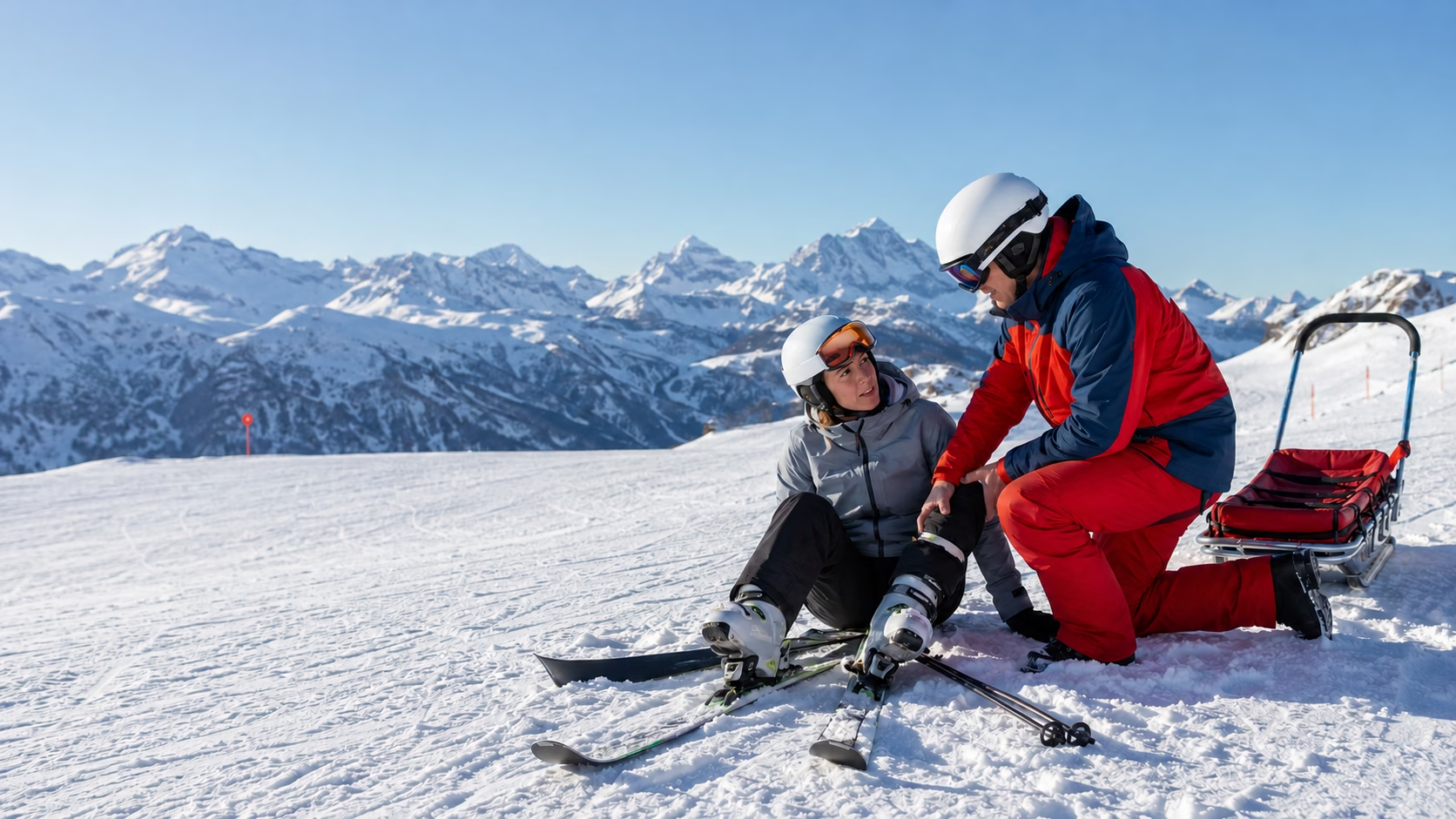
Immediate rescue
Ski patrol or local emergency responders move the injured person away from immediate danger.
Medical transport
An ambulance or other medically appropriate service transfers the traveller for assessment or treatment.
Medical evacuation
A medically necessary transfer may be organised when suitable local care is unavailable or inaccessible.
Repatriation
An approved return for medical reasons may be arranged under the applicable policy benefit and conditions.
These stages can happen during the same incident, but they are not interchangeable. One invoice may concern piste rescue, another an ambulance, another hospital treatment and another a later transfer. Good mountain rescue travel insurance research checks each cost under the benefit that actually applies.
Does Travel Insurance Cover Mountain Rescue?
Do not assume that every travel insurance policy covers mountain rescue. The SoEasy public FAQ identifies medical transportation and repatriation among common medical coverages, but it also tells travellers to consult the coverage table because amounts and available benefits vary by contract and provider.
Medical transportation or repatriation
These appear among the common medical benefits, subject to the selected contract, its limits and its approval requirements.
Search, mountain recovery and helicopter rescue
These services should not be promised unless the selected Benefits Table and policy definitions expressly support them.
A statement that a policy includes medical transportation does not by itself confirm unlimited search-and-rescue expenses. Before paying, look for the exact language used for rescue, search, ambulance, evacuation and repatriation. If it is unclear, request written clarification.
Mountain Rescue vs Medical Evacuation vs Repatriation
Travellers often use these expressions as if they mean the same service. Insurance documents may treat them very differently, so the distinction is central to choosing mountain rescue travel insurance.
Mountain or piste rescue
The immediate operation that reaches, stabilises and removes a person from the incident location. It may be carried out by resort ski patrol, public emergency services or a specialist mountain team.
Ground ambulance transfer
Transport from the rescue handover point to a clinic or hospital. The service can be billed separately from the initial mountain response.
Helicopter transport
An aircraft may be used when local responders consider it necessary, but the decision to dispatch one does not automatically establish that the insurance will pay the full invoice.
Medical evacuation
An organised transfer to an appropriate medical facility, potentially in another city or country, when justified by the medical circumstances and policy conditions.
Medical repatriation
An approved return to the traveller’s country for medical reasons, using the method and timing arranged under the applicable assistance and policy terms.
The assistance provider normally needs medical information before approving a transfer or repatriation. The safest approach is to contact the number in the issued certificate as soon as possible and follow the instructions given.
Does Mountain Rescue Travel Insurance Cover a Helicopter?
A helicopter is a method of rescue or medical transport—not an automatic insurance benefit. The selected policy must contain wording that responds to the relevant expense, and the transport generally needs to be medically necessary, reasonable in the circumstances and handled according to the assistance requirements.
Weather, terrain, distance from medical care and the severity of the injury can influence the local rescue decision. Insurance assessment is a separate step. A resort may dispatch a helicopter because that is its operational protocol, while the insurer later examines eligibility, necessity, activity conditions, limits and exclusions.
Check whether the wording distinguishes a search helicopter, a rescue helicopter and an air ambulance. Also review any sub-limit, excess, geographic condition or requirement for prior approval. If immediate danger makes advance contact impossible, prioritise safety and contact the assistance service as soon as reasonably possible afterwards.
Why the Winter Sports Extension Still Matters
A medical transport benefit does not automatically make the activity that caused the injury eligible. Mountain rescue travel insurance must therefore be considered together with the sports conditions. For the SoEasy options discussed here, amateur recreational skiing and snowboarding require the WINTER SPORTS (SKI)/ SUMMER SPORTS EXTENSION on an eligible SCHENGEN TRAVELER – SINGLE TRIP or WORLDWIDE TRAVELER – SINGLE TRIP selection, according to the itinerary and availability.
The published extension applies to skiing and snowboarding at recognised ski centres with organised, marked slopes or routes for public use. Off-piste skiing is permitted only when accompanied by a certified guide and when the area has not been classified as dangerous or prohibited. Competitions, contests and professional activities are excluded, and the published sports cover is limited to a maximum of 15 days.
A policy may contain medical transportation, but a claim connected with skiing can still depend on whether the correct sports extension was included and whether the activity complied with its conditions.
Read the broader winter sports travel insurance guide and our detailed ski travel insurance guide before selecting the policy.
Does Off-Piste Rescue Change the Insurance Position?
It can. Rescue outside a marked piste can involve more difficult access, specialist teams and higher costs. More importantly, the activity must first satisfy the published off-piste condition. For the SoEasy extension described above, that means travelling with a certified guide and avoiding an area classified as dangerous or prohibited.
Seeing other skiers use a route does not prove it is permitted. Tracks in the snow, advice from a friend or a social-media recommendation do not replace resort notices, local avalanche information or a certified guide. A guide also cannot override an official closure or prohibition.
Before leaving marked slopes, confirm the route, guide credentials, local warnings and the applicable insurance wording. Keep the guide booking and resort information. If an incident occurs, those records may help explain where the group travelled and under what supervision.
What to Do After a Mountain Accident
Safety comes first. Contact resort ski patrol or the local emergency number when urgent assistance is required. Do not delay an essential rescue merely to search for insurance documents.
- Give the responder your location, piste number and visible landmarks
- Follow resort instructions and avoid moving an injured person unnecessarily
- Contact the 24-hour assistance service as soon as the situation allows
- Use the telephone number and methods shown in the issued documents
- Ask the provider for a rescue report and an itemised original invoice
- Keep medical notes, prescriptions, receipts and proof of payment
- Record the activity, slope status, guide details and incident circumstances
- Do not arrange a non-urgent transfer or repatriation without approval
The SoEasy FAQ says travellers should contact the insurance company as soon as possible for serious incidents requiring hospitalisation. It also warns that transfer or accommodation costs may not be covered without prior approval. If contact is impossible before emergency admission, notify the assistance team as soon as possible afterwards.
Documents You May Need for a Rescue Claim
The required evidence depends on the insurer, contract and incident. A rescue receipt alone may not show why the service was necessary or whether it connects to an eligible activity. Build a complete record while the details are still available.
Rescue report
Provider, location, time, response method and circumstances of the recovery.
Medical evidence
Diagnosis, treatment notes, hospital report and the medical reason for any transfer.
Financial evidence
Itemised invoices, original receipts, payment confirmation and currency details.
Trip evidence
Travel tickets, resort booking, ski pass, guide details and the issued insurance documents.
The assistance or claims team may request additional evidence. Submit documents within the time and method stated in the policy and claims instructions, and keep copies of everything sent. Complete evidence helps the insurer assess a mountain rescue travel insurance claim without relying on assumptions about what happened.
Mountain Rescue Travel Insurance for Schengen Ski Trips
Schengen visa medical-insurance requirements and mountain rescue travel insurance answer different questions. Article 15 of the EU Visa Code requires applicants for a uniform visa to demonstrate adequate travel medical insurance valid for the relevant territory and period, with at least €30,000 for the specified repatriation, urgent medical attention and emergency hospital-treatment purposes.
A certificate meeting the visa requirement does not automatically confirm skiing eligibility, piste rescue, search costs or helicopter transport. A traveller going to Austria, France, Italy, Switzerland or another Schengen ski destination may need both a visa-compliant certificate and the appropriate winter sports extension.
Read our Schengen Visa Insurance guide and the detailed guide to Schengen travel insurance requirements. Then compare the final certificate with the real destination, transit countries, dates and activities.
How to Compare Mountain Rescue Travel Insurance
Do not compare mountain rescue travel insurance only by premium or the headline medical limit. Use the real mountain itinerary and examine the expensive services that could follow an accident.
Enter the complete journey
Declare the correct departure country, full travel dates, ski destination, every country visited and all transit countries.
Describe the real activities
Separate marked-piste skiing from guided off-piste use, snowboarding and any activity not clearly named in the extension.
Add the correct extension
Select an eligible Single Trip plan and add WINTER SPORTS (SKI)/ SUMMER SPORTS EXTENSION before completing payment.
Read the rescue definitions
Check search, piste rescue, ambulance, helicopter, medical evacuation and repatriation individually rather than treating them as one promise.
Check limits and approval rules
Review sub-limits, excesses, exclusions, medical necessity and when assistance authorisation is required.
Save emergency contacts offline
Keep the certificate, policy wording, Benefits Table and 24-hour assistance details accessible without an internet connection.
You can compare travel insurance options online. Choose the Single Trip territory that matches the full itinerary and add the WINTER SPORTS (SKI)/ SUMMER SPORTS EXTENSION where required. The quotation and purchase continue on the external SoEasy Travel Insurance platform.
Confirm the applicable benefit, maximum amount, excess, medical-necessity test, geographic conditions, assistance approval and activity exclusions in the selected documents.
Preparing for a winter mountain trip?
Check travel insurance and the required sports extension
Use the complete itinerary, review medical transportation and repatriation benefits, and verify rescue-related terms before purchasing.
Know who does what before an emergency
Local responders decide how to protect and move an injured traveller. The assistance service coordinates eligible medical support and approved transport under the contract. The insurer then assesses expenses against the selected benefits, limits and exclusions.
Good preparation means choosing the correct activity extension, understanding rescue terminology and keeping the issued documents accessible throughout the trip.
Rescue and evacuation FAQ
Frequently asked questions
Practical answers about ski patrol, helicopters, medical evacuation, repatriation and assistance approval.
Does travel insurance automatically cover mountain rescue?
No. Check the selected Benefits Table and policy wording for search, mountain rescue, medical transportation, evacuation and repatriation. These services may have different definitions, limits, exclusions and approval requirements.
Is helicopter rescue covered by travel insurance?
Do not assume it is. Helicopter transport must be assessed under the relevant policy benefit and may depend on medical necessity, reasonable cost, activity eligibility, limits and assistance approval.
What is the difference between mountain rescue and medical evacuation?
Mountain rescue removes a person from the incident location. Medical evacuation is an organised transfer to an appropriate medical facility when justified by the medical circumstances and policy terms. They can generate separate services and invoices.
Is medical repatriation the same as an ambulance to hospital?
No. An ambulance normally provides local ground transport, while medical repatriation is an approved return for medical reasons, often coordinated after assessment by the assistance and medical teams.
Do I need the winter sports extension for a skiing accident?
For the SoEasy options explained here, eligible amateur recreational skiing and snowboarding require the WINTER SPORTS (SKI)/ SUMMER SPORTS EXTENSION on an eligible Single Trip plan.
Can off-piste mountain rescue be covered?
The activity must first satisfy the published off-piste conditions: a certified guide must accompany the skier, and the area must not be classified as dangerous or prohibited. Rescue expenses still depend on the selected policy benefits and exclusions.
Must I contact assistance before medical transport?
Contact the 24-hour assistance service as soon as possible. The SoEasy public FAQ states that approval is important for transfer or repatriation expenses. In an immediate emergency, prioritise safety and call as soon as reasonably possible afterwards.
What documents should I keep after a mountain rescue?
Keep the rescue and medical reports, itemised invoices, original receipts, proof of payment, ski-pass or guide details, trip documents and all communication with the assistance service. The claims team may request further evidence.
Sources and editorial note: Product and assistance information was reviewed on 13 August 2026 against the SoEasy Travel Insurance FAQ, including its medical transportation, repatriation, hospital-contact, winter/summer sports and policy-document guidance. Schengen information was checked against Article 15 of the consolidated EU Visa Code. Rescue availability, medical necessity, approval, eligibility, limits, excesses and exclusions depend on the selected insurer, certificate, Benefits Table and policy wording. This guide provides general information and does not replace an insurance contract, medical advice, assistance instructions or local rescue guidance.

Written by Ionut BalanTravel Insurance Specialist and author. Ionut writes practical travel insurance and travel-preparation guides based on policy documentation, official travel information and questions asked by international travellers.