
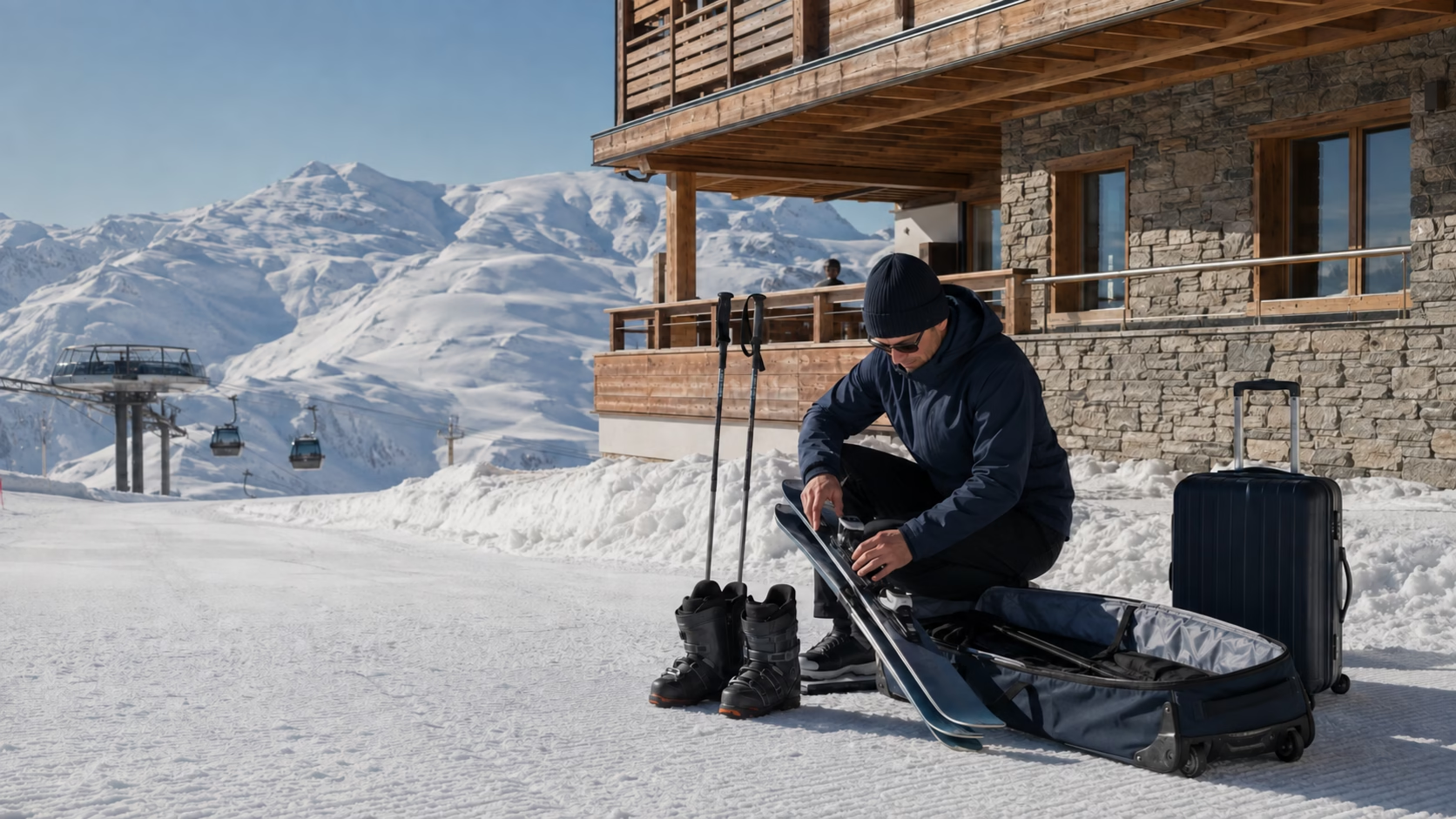
Winter 2026/27 • Equipment and baggage guide
Ski Equipment InsuranceAre skis and snowboards actually covered?
Skis, snowboards, boots and rented gear are not automatically protected by every baggage benefit. Learn what to check before packing or hiring equipment.
Ski equipment insurance must be checked as a separate question from ordinary baggage cover and winter sports activity cover. A policy can allow recreational skiing under an optional sports extension while still excluding skis, snowboards or related equipment from its baggage benefit.
This distinction matters when comparing ski equipment insurance, whether you travel with your own equipment, rent it at the resort or place a ski bag in an airline’s care. Loss, theft, accidental damage, delay and rental liability are different events. Each may be handled by a different contract, limit or claims process.
The current SoEasy public FAQ, reviewed on 13 August 2026, lists ski and golf equipment among items excluded from its general baggage section. Its winter and summer sports extension concerns eligible recreational activities and associated policy benefits; it should not be read as automatically converting ski equipment into insured baggage. The quotation, insurer, Benefits Table, certificate and policy wording issued for the selected option remain decisive.
What Is Ski Equipment Insurance?
Ski equipment insurance is a convenient description for protection that specifically responds to defined winter sports equipment and defined insured events. It is not a universal benefit with identical rules across all travel policies. Some products may offer a dedicated sports-equipment section, some may include limited protection under baggage wording, and others may exclude the equipment entirely.
A useful comparison starts with four separate areas:
Owned equipment
Skis, snowboards and accessories belonging to the insured traveller, subject to the policy definition and proof of ownership.
Rented equipment
Gear hired from a resort or rental company, which may involve a separate rental agreement, deposit and liability terms.
Carrier handling
Loss, delay or damage while an airline or another transport provider has custody of a checked ski bag.
Activity eligibility
The separate question of whether skiing or snowboarding itself is permitted under the selected sports extension.
Do not assume that the phrase “baggage included” answers all four questions. Effective ski equipment insurance wording should identify the equipment, events, monetary limits, excess, depreciation rules, security conditions and evidence required for a claim.
Are Skis and Snowboards Covered by Travel Insurance?
Not automatically. In the SoEasy public FAQ currently available, ski and golf equipment are expressly identified among items excluded from general baggage protection. That means the presence of a baggage benefit should not be presented as confirmation that skis or snowboards are insured.
Check the exclusion list first
General baggage may protect eligible personal belongings while excluding sports equipment, high-value items or specified categories.
Look for an express benefit
Only rely on ski gear protection when the selected documents clearly define the equipment and the insured events.
The answer can also change between products sold by the same provider. Read the live Benefits Table and full terms for the option you intend to buy. If the position remains unclear, request written confirmation before travelling with valuable equipment.
A Winter Sports Extension Does Not Automatically Cover Equipment
The sports extension and the equipment benefit perform different jobs. An extension may make eligible amateur skiing or snowboarding part of the insured trip, subject to its conditions. It does not necessarily pay for a broken ski, a stolen snowboard, a delayed ski bag or an amount owed to a rental shop.
For the SoEasy options discussed in this winter series, eligible amateur recreational skiing and snowboarding require the WINTER SPORTS (SKI)/ SUMMER SPORTS EXTENSION on an eligible SCHENGEN TRAVELER – SINGLE TRIP or WORLDWIDE TRAVELER – SINGLE TRIP option, according to the destination and availability. The published extension has activity conditions and a maximum duration of 15 days; competitions and professional activities are excluded.
Adding that extension is important for activity eligibility, but it does not override the published exclusion of ski equipment from general baggage. Read our winter sports travel insurance guide and winter sports activity guide for the wider eligibility rules.
What Can Count as Ski Equipment?
The policy definition controls what counts as ski equipment. A traveller may think of the whole winter kit as one set, while an insurer may define only certain items or apply a separate per-item limit.
- Downhill, touring or cross-country skis
- Snowboards and their bindings
- Ski or snowboard boots
- Ski poles and approved protective helmets
- Goggles and other named protective accessories
- Ski or snowboard bags and defined spare parts
This list describes common equipment; it is not a promise of cover. Clothing, electronic devices, avalanche equipment, action cameras and ordinary luggage may be categorised separately. Check whether items must be owned by the insured person, whether hired equipment is included and whether an age or value restriction applies.
Owned vs Rented Ski Equipment
Owned and rented gear create different financial risks. For owned equipment, the insurer may ask for the original receipt, purchase date, make, model, serial number and evidence of current value. Depreciation, per-item limits and an excess may reduce any eligible settlement.
For rented equipment, the traveller may be contractually responsible to the hire company. A deposit, waiver or shop protection plan is not the same as travel insurance. Conversely, personal ski equipment insurance does not automatically reimburse every charge made under a rental agreement.
Before accepting rented gear
Photograph the equipment, record existing scratches or damage and keep the signed rental agreement.
Before buying separate protection
Read what the rental waiver covers, its excess, theft conditions and exclusions for negligence or prohibited terrain.
Before relying on travel insurance
Confirm that hired ski equipment is expressly included and check the maximum amount, period and required reports.
If a shop charges for loss or damage, obtain an itemised statement explaining the equipment, event and amount. Do not discard the rental contract or payment evidence.
Airline Loss, Delay or Damage to a Ski Bag
When an airline has custody of checked equipment, notify the carrier immediately. Airline liability and travel insurance are separate routes. A carrier may investigate under its own conditions and applicable passenger-baggage rules, while an insurer assesses the event under the selected policy.
Before leaving the baggage-reclaim area, request a Property Irregularity Report (PIR) for missing or damaged baggage. Keep boarding passes, baggage tags, the booking confirmation and all correspondence. Photograph visible damage before opening or repairing the bag, and retain the damaged item until both the carrier and insurer confirm what they need.
The SoEasy FAQ describes temporary baggage-delay protection after more than 12 hours, but it also lists ski equipment as excluded from general baggage. Do not buy replacement gear in reliance on that benefit without checking the applicable wording and contacting the assistance or claims team.
If you must hire equipment while waiting, ask the airline what reasonable expenses it may consider and keep every receipt. A future reimbursement should never be assumed.
Theft at a Resort, Hotel or During Transport
Theft protection within ski equipment insurance normally depends on both the insured item and the way it was secured. Equipment left unattended outside a restaurant, on an unlocked vehicle rack or in an accessible communal area may fall within an unattended-property or reasonable-care exclusion.
The SoEasy FAQ instructs travellers to report loss or theft to the police within 24 hours and obtain a written report. Where a hotel, airline, railway company, coach operator or other carrier was responsible for the property, also obtain its written incident report.
- Use locked ski storage where the accommodation provides it
- Do not leave equipment visible in an unattended vehicle
- If a vehicle is used, review the policy’s locked-vehicle and forced-entry conditions
- Keep the storage receipt, police report and property reference number
- Notify the insurer or claims service within the stated time limit
A police report records the event; it does not guarantee that ski equipment insurance will respond. Eligibility still depends on the selected protection, security conditions, evidence, limits and exclusions.
Accidental Damage, Wear and Mechanical Failure
A cracked ski after an insured accident is different from a delaminated old ski, a worn edge or a binding that fails through ordinary use. General baggage wording commonly excludes wear and tear, gradual deterioration and mechanical failure; the SoEasy FAQ lists normal wear and mechanical failure among excluded situations.
If a sudden incident damages the equipment, stop using it if continued use could make the damage worse or create a safety risk. Ask a qualified repair shop for a written assessment stating the apparent cause, repairability and cost. Keep the item and do not authorise disposal until the claim handler agrees.
Cosmetic marks, scratches that do not affect function and manufacturing defects may be treated differently from accidental structural damage. The retailer’s or manufacturer’s warranty may be more relevant for a defect that was not caused by an insured travel event.
How to Protect Ski Equipment Before Travel
Create an equipment record
Photograph each item, note its make, model and serial number, and save purchase receipts or other proof of ownership.
Check the carrier’s sports-baggage rules
Confirm dimensions, weight, packing requirements, fees and whether boots or helmets may share the ski bag.
Use a protective bag
Pad bindings and edges, secure loose parts and photograph the closed bag before handing it to the carrier.
Review owned and hired gear separately
Check definitions, limits, depreciation, rental liability and security conditions for each category.
Plan secure storage
Ask the accommodation about a locked ski room and avoid leaving valuable gear unattended in public areas.
Save claims instructions offline
Keep the policy, assistance details and reporting steps available even when mobile service is limited.
What to Do After Ski Equipment Is Lost or Damaged
Act promptly and create a clear evidence trail. The organisation responsible for the location or custody of the item usually needs to be notified before you leave.
- Airline or carrier: obtain a PIR or written baggage report
- Theft: report it to the police within the required period and keep the full report
- Hotel or resort: request an incident report from management or security
- Rental equipment: notify the hire company and obtain an itemised damage or loss statement
- Accidental damage: photograph the scene and item, then obtain a professional assessment
- All cases: keep original receipts, tags, tickets, agreements, invoices and correspondence
Contact the insurer or claims administrator early. Ask before repairing, replacing or discarding equipment, because inspection or additional evidence may be required.
How to Compare Ski Equipment Insurance
Compare the protection against the equipment you will actually take or hire. A low headline price is not useful if the definition excludes the most valuable item or the limit is below the likely loss.
Definitions
Are skis, snowboard, boots, bindings, helmet, bag and rented gear expressly included?
Insured events
Does the wording address theft, accidental damage, carrier loss and delay separately?
Financial terms
Check the total limit, per-item limit, excess, depreciation and any separate rental-equipment maximum.
Conditions
Review unattended-property rules, locked storage, vehicle exclusions, reporting deadlines and evidence.
Also ask whether the benefit pays reasonable hire costs when owned equipment is delayed, whether accessories share the same limit and whether the policy requires the carrier’s response first. If ski equipment insurance is not included, decide whether specialist cover, a rental-shop waiver or another suitable arrangement is needed.
You can compare travel insurance options online and add the relevant winter sports extension where available. The quotation and purchase continue on the external SoEasy Travel Insurance platform. Review the final Benefits Table and policy wording carefully: the general baggage information currently excludes ski equipment.
Ski Equipment Insurance for Schengen Trips
Schengen visa medical insurance and ski equipment insurance solve different problems. Article 15 of the EU Visa Code concerns travel medical insurance for specified repatriation, urgent medical attention and emergency hospital-treatment risks. It does not establish protection for skis, snowboards or baggage.
A certificate can satisfy the applicable visa medical-insurance requirement without covering a lost ski bag or permitting winter sports. Travellers should check the visa certificate, activity extension and equipment protection independently. See our Schengen Visa Insurance guide and Ski Travel Insurance guide before selecting a plan.
Confirm that the trip territory is correct, that skiing or snowboarding is eligible under the required extension, and that the selected documents expressly protect the equipment you own or hire. One check does not replace the other two.
Taking or hiring winter sports gear?
Check the travel policy before packing your ski bag
Enter the complete itinerary, add the required activity extension and read the equipment and baggage exclusions before purchasing.
Protect the activity and the equipment separately
The correct winter sports extension can make an eligible recreational activity part of the insured trip. It does not automatically protect the skis, snowboard, boots or rented gear used for that activity.
Good preparation means reading the baggage exclusions, looking for specific equipment wording, keeping ownership and transport evidence, and understanding how to report an incident before the journey begins.
Equipment and baggage FAQ
Ski equipment insurance questions
Clear answers about skis, snowboards, rented gear, airline handling, theft and Schengen trips.
Does travel insurance automatically cover ski equipment?
No. General baggage protection may exclude sports equipment. Look for wording that expressly defines skis, snowboards or hired gear and check the insured events, limits, excesses and exclusions.
Does SoEasy general baggage cover skis or snowboards?
The SoEasy public FAQ currently lists ski and golf equipment among items excluded from general baggage. Always confirm the live Benefits Table and policy wording for the option selected.
Does the winter sports extension cover ski equipment?
Do not assume it does. The extension addresses eligible recreational activities and related policy conditions. It does not automatically override the general baggage exclusion for ski equipment.
Is rented ski equipment covered?
Only if the selected wording expressly includes hired equipment and the event meets its conditions. A rental-shop waiver, deposit and travel-insurance benefit are separate arrangements.
What should I do if an airline loses or damages my ski bag?
Report it before leaving the baggage area, obtain a Property Irregularity Report, keep baggage tags and travel documents, photograph damage and contact the carrier and insurer promptly.
What documents are needed after ski equipment theft or loss?
Keep the police or carrier report, proof of ownership, original receipts, photographs, baggage tags, tickets, rental agreement, invoices and all claims correspondence. Further evidence may be requested.
Are boots, helmets and goggles treated as ski equipment?
They may be, but definitions differ. Check whether each item is named, categorised as ordinary baggage or accessories, and subject to a separate per-item or total limit.
Does Schengen visa insurance cover ski equipment?
Not by virtue of meeting the visa requirement. Schengen visa medical insurance concerns specified medical and repatriation risks; equipment and winter sports eligibility must be checked separately.
Sources and editorial note: Product, baggage, claims and winter sports information was reviewed on 13 August 2026 against the SoEasy Travel Insurance FAQ, including its baggage exclusions, reporting guidance and sports-extension conditions. Schengen information was checked against Article 15 of the consolidated EU Visa Code. Equipment definitions, insured events, eligibility, limits, depreciation, excesses, security conditions and exclusions depend on the selected insurer, certificate, Benefits Table and policy wording. This guide provides general information and does not replace an insurance contract, carrier terms, rental agreement or claims instructions.

Written by Ionut BalanTravel Insurance Specialist and author. Ionut writes practical travel insurance and travel-preparation guides based on policy documentation, official travel information and questions asked by international travellers.