
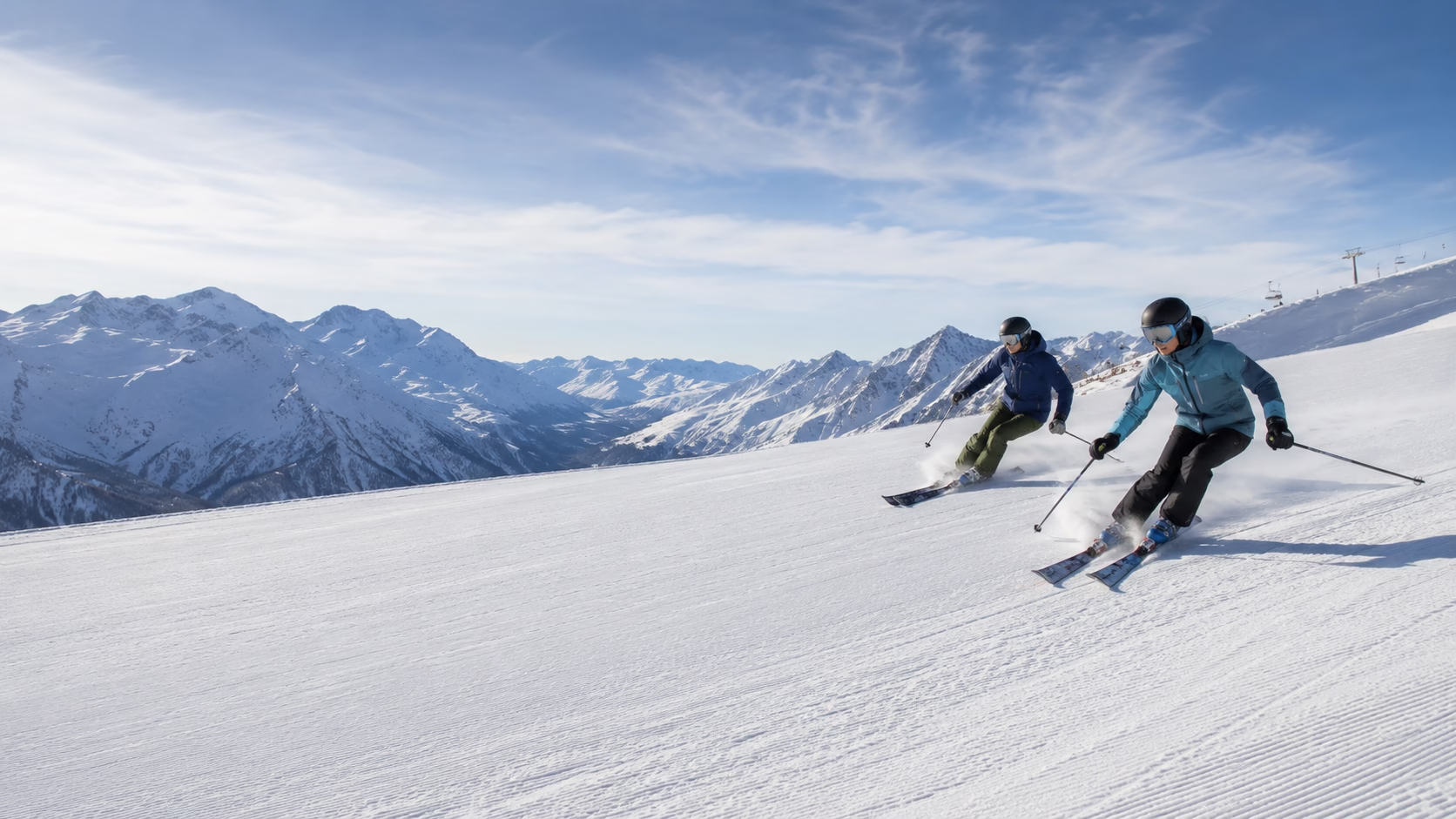
Ski season 2026/27 • Recreational skiing
Ski Travel InsuranceCover checks before you reach the slopes
Skiing is not automatically included in standard travel insurance. This guide explains the required extension, marked-piste rules, off-piste conditions and the documents to check before departure.
Ski travel insurance should be arranged before you pay for the policy—not after you arrive at the resort. With SoEasy Travel Insurance, eligible recreational skiing requires the WINTER SPORTS (SKI)/ SUMMER SPORTS EXTENSION on an eligible Single Trip plan. A standard certificate showing your ski destination does not include slope activities automatically.
A ski holiday introduces activity-specific questions that do not arise on an ordinary city break. Where will you ski? Are the slopes marked and open to the public? Will you leave the piste? How many days will you participate? Are you skiing recreationally, training for a competition or working at the resort?
Those details matter because the policy certificate, benefits table, extension wording and general exclusions work together. This guide helps you complete the quotation accurately and identify what must be checked; it does not replace the insurance contract.
What Is Ski Travel Insurance?
Ski travel insurance is travel insurance selected with specific terms for eligible skiing-related risks. The product may be a specialist policy or, as with the SoEasy options explained here, a broader Single Trip contract combined with an additional sports extension.
The important point is the extension—not the name of the destination. Buying travel insurance for Austria, France, Switzerland, Italy, Bulgaria or Georgia does not by itself activate skiing cover. The correct option must be selected during the quotation.
Real itinerary
Country of departure, ski destination, transit countries and complete travel dates.
Eligible plan
A qualifying Schengen Traveler or Worldwide Traveler Single Trip selection.
Sports extension
The exact Winter Sports (Ski)/Summer Sports Extension added before purchase.
Policy checks
Activities, duration, benefits, excesses, assistance process and exclusions reviewed.
All four elements should agree. A policy can show the right country and dates while still lacking the sports extension required for skiing.
Which Ski Insurance Extension Do You Need?
For the SoEasy options covered by this guide, select either SCHENGEN TRAVELER – SINGLE TRIP or WORLDWIDE TRAVELER – SINGLE TRIP and add the WINTER SPORTS (SKI)/ SUMMER SPORTS EXTENSION. The suitable Single Trip territory depends on your complete itinerary and the plans available in the quotation.
Single Trip without the sports extension
The policy may address ordinary travel risks, but do not assume it covers an injury or expense connected with skiing.
Eligible Single Trip plus the extension
The sports extension brings its specific activity definitions, duration limit, conditions and exclusions into the contract.
Add it before completing the purchase. If a policy has already been issued without the required extension, contact SoEasy before the trip begins. Its published FAQ says adding an extension may be possible only under stated pre-trip conditions; never assume the change is active until revised documents confirm it.
For a broader explanation of other eligible activities, read the main winter sports travel insurance guide.
Where Can You Ski Under the Extension?
The published SoEasy conditions describe skiing in recognised ski centres with organised slopes or routes marked for public use. This is more specific than simply being on snow inside a resort boundary.
- Use recognised ski centres operating for public recreation
- Stay on organised, marked and officially open slopes
- Follow piste classifications and resort safety notices
- Use appropriate protective equipment and ski responsibly
- Do not enter dangerous, prohibited or closed areas
- Check instructor or guide qualifications where relevant
A marked slope can still be temporarily closed because of weather, avalanche risk, poor visibility or maintenance. Entering a closed piste or ignoring resort instructions can place a claim outside the policy conditions even if the run is normally part of a recognised ski area.
Is Off-Piste Skiing Covered?
Off-piste skiing is not covered without conditions. The published SoEasy wording permits it only when the skier is accompanied by a certified guide and the area has not been designated as dangerous or prohibited.
All parts of that condition matter. Travelling with an experienced friend is not the same as using a certified guide, and having a guide does not make a closed, dangerous or prohibited area acceptable.
Before leaving a marked piste, confirm the guide’s credentials, the route, current avalanche information, resort restrictions and the exact policy wording. Keep the guide or operator’s booking record in case the circumstances must later be documented.
How Long Does Ski Travel Insurance Apply?
The published Winter/Summer Sports Extension applies for a maximum of 15 days. This sports limit is separate from the overall duration of the travel policy.
For example, a longer European journey may include only several days of skiing. Do not assume that buying a policy for the entire trip automatically extends the sports element beyond its stated maximum. Check the certificate and wording to understand how the skiing period must fit within the insured journey.
If you plan to ski for more than 15 days, obtain clarification before purchasing. Never split dates or provide an inaccurate itinerary simply to fit a product limit.
How to Buy Ski Travel Insurance Correctly
Complete the quotation after you know your travel dates, ski destination, transit route and planned number of skiing days.
Describe the real journey
Enter the correct departure country, complete dates, ski destination and every required transit or onward country.
Choose an eligible plan
Select SCHENGEN TRAVELER – SINGLE TRIP or WORLDWIDE TRAVELER – SINGLE TRIP as appropriate for the available itinerary.
Add the sports option
Choose WINTER SPORTS (SKI)/ SUMMER SPORTS EXTENSION before completing payment.
Read beyond the headline
Review marked-piste rules, off-piste conditions, the 15-day limit, medical benefits, excesses and exclusions.
Verify the final documents
Confirm that the traveller, destination, dates and selected extension are reflected correctly and save all documents offline.
What Does Ski Travel Insurance Not Automatically Cover?
Adding the extension does not turn every cost associated with a ski resort into an insured benefit. Check each of the following separately in the selected benefits table and wording.
- Owned, borrowed or rented skis and other equipment
- Ski-equipment theft, damage, delay or rental replacement
- Mountain rescue, search operations or helicopter transport
- Piste closure, avalanche disruption and unused lift passes
- Lessons, race fees, accommodation or prepaid packages
- Trip cancellation, curtailment or delayed departure
- Personal liability arising from a collision on the slope
- Activities not specifically included by the extension
Benefit names, limits and exclusions vary. Do not promise that rescue, equipment or cancellation is included unless the selected policy wording clearly confirms it.
You can check ski travel insurance options online. Select an eligible Single Trip plan and add the WINTER SPORTS (SKI)/ SUMMER SPORTS EXTENSION before purchase. The quotation and purchase are completed on the external SoEasy Travel Insurance platform.
Ski Travel Insurance for a Schengen Visa
A Schengen visa insurance certificate and skiing cover answer different questions. Article 15 of the EU Visa Code requires applicants for a uniform visa to demonstrate adequate travel medical insurance for the required territory and period, with at least €30,000 for the specified urgent medical and repatriation purposes.
Satisfying that visa requirement does not automatically add skiing. A visa applicant travelling to an Alpine resort must check both the Schengen medical-insurance requirements and the separate winter sports extension.
Use our Schengen travel insurance requirements guide to review the visa side, then confirm that the issued policy also reflects the ski extension before the appointment and departure.
What to Do After a Skiing Accident
Obtain urgent help first. Contact ski patrol or emergency services where necessary, then call the assistance service shown in the insurance documents as soon as reasonably possible and follow its instructions.
Keep the piste-patrol or resort report, medical records, prescriptions, invoices, receipts and proof of payment. Record the piste name, whether it was open, whether the incident occurred on or off piste, any witnesses and the guide’s details where relevant.
If another skier was involved, exchange contact information and obtain the incident report. Do not admit liability or agree to a private settlement without following the policy and assistance instructions. Every claim is assessed on its facts and documentation.
Common Ski Insurance Mistakes to Avoid
The most serious mistake is buying an ordinary travel policy and assuming the ski destination makes the sport covered. Others include forgetting the extension, selecting the wrong territory, omitting a transit country, shortening the travel dates and failing to check the 15-day sports limit.
On the mountain, do not ignore piste closures, cross into a prohibited area, treat an experienced companion as a certified guide or assume every snow activity falls under skiing. Competitions, contests and professional or work-related participation are excluded under the published SoEasy sports conditions.
Select an eligible Single Trip plan and add the WINTER SPORTS (SKI)/ SUMMER SPORTS EXTENSION before completing the purchase. Cover remains subject to the extension wording, policy benefits, limits, safety conditions and exclusions.
Preparing for a ski holiday?
Check ski travel insurance options
Enter the complete journey, choose an eligible Single Trip plan and add the required sports extension before reviewing the final documents.
Prepare the policy as carefully as the ski trip
Accurate ski travel insurance starts with the real itinerary, an eligible Single Trip plan and the correct sports extension. The next step is understanding the boundaries: recognised centres, marked slopes, specified off-piste conditions, a maximum 15-day sports period and the general exclusions.
Keep the certificate, policy wording and assistance contacts available offline. If your activity, destination or dates change, check the insurance position before reaching the slopes.
Ski insurance FAQ
Frequently asked questions
Practical answers about the ski extension, marked pistes, off-piste conditions and important limits.
Does standard travel insurance cover skiing?
No. For the SoEasy products explained here, eligible recreational skiing requires the WINTER SPORTS (SKI)/ SUMMER SPORTS EXTENSION on an eligible Single Trip plan.
Which plans can include the ski extension?
Choose either SCHENGEN TRAVELER – SINGLE TRIP or WORLDWIDE TRAVELER – SINGLE TRIP, according to the itinerary and availability, then add the WINTER SPORTS (SKI)/ SUMMER SPORTS EXTENSION before purchase.
Must I ski on marked pistes?
The published conditions include skiing within recognised ski centres on organised slopes or routes marked for public use. Follow resort warnings and do not enter closed, dangerous or prohibited areas.
Is off-piste skiing covered?
Only under the stated conditions: the skier must be accompanied by a certified guide and the area must not be designated as dangerous or prohibited. All conditions must be satisfied.
For how many days does the ski extension apply?
The published SoEasy conditions limit winter/summer sports coverage to a maximum of 15 days. The overall travel policy can have a different duration, so review both periods.
Does ski insurance automatically cover mountain rescue?
Do not assume it does. Search, mountain rescue, helicopter transport and medical evacuation must be checked against the selected benefits table, definitions, limits and exclusions.
Can the extension be added after the policy is issued?
Add it during the original purchase whenever possible. SoEasy’s published FAQ says an extension may be added before the trip under stated conditions, including that no insured has travelled, no claim has been or will be submitted and Single Trip cover has not started. Contact SoEasy and wait for revised documents before skiing.
Does Schengen visa insurance include skiing?
No. Schengen visa medical-insurance requirements and skiing cover are separate. A visa-compliant certificate does not by itself activate the winter sports extension.
Sources and editorial note: Product information was reviewed on 13 August 2026 against the SoEasy Travel Insurance FAQ, including the published winter/summer sports conditions. Schengen information was checked against Article 15 of the consolidated EU Visa Code. Availability, eligibility, benefits and exclusions depend on the live quotation, certificate and selected policy wording. This guide provides general information and does not replace an insurance contract, medical advice or resort safety instructions.

Written by Ionut BalanTravel Insurance Specialist and author. Ionut writes practical travel insurance and travel-preparation guides based on policy documentation, official travel information and questions asked by international travellers.