
Destination guide • Syria 2026
Can You Use Cards in Syria?Visa, Mastercard, cash and payment backups
International card payments have started, but the rollout is gradual. Travellers should understand what changed—and why a cash backup remains essential.
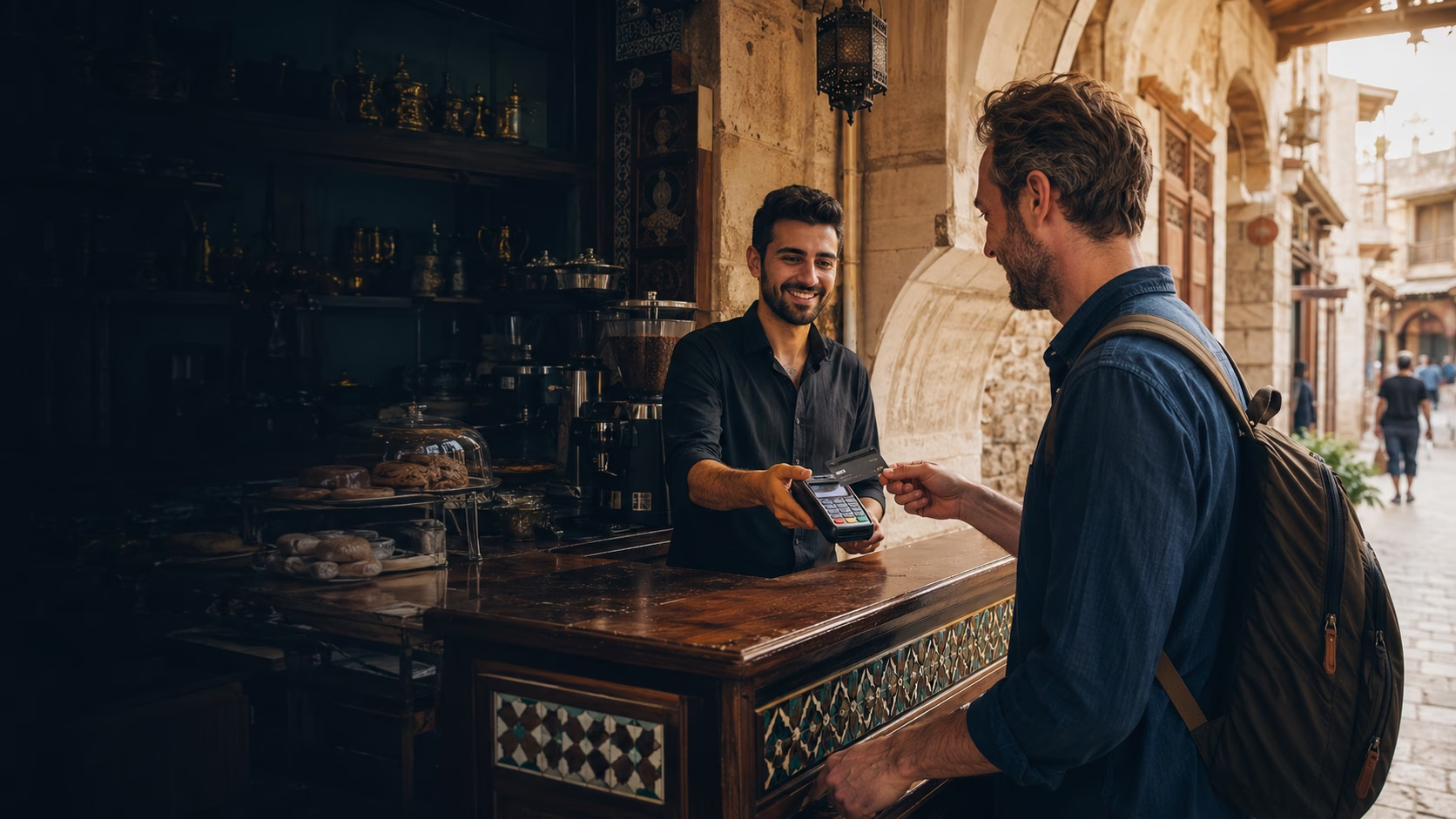
Yes, international Visa and Mastercard payments have now been tested in Syria. However, this does not mean that foreign cards are accepted everywhere. The infrastructure is being introduced gradually, so visitors should still prepare for a largely cash-dependent journey.
For more than 15 years, international card use in Syria was effectively disconnected from the global payment networks familiar to most travellers. That began to change in August 2026, when Visa, Mastercard and their banking partners announced the first live international card transactions in the country.
The development is significant, but its practical meaning is narrower than some headlines suggest. One successful transaction does not mean every bank will authorise a card, every shop has a connected terminal or international ATM withdrawals are widely available.
What Changed in August 2026?
Visa, Mastercard and their banking partners announced two important payment milestones within the same week.
Visa transaction
Visa tested a first live international transaction with Fransabank Lebanon and Syrian payments company Paymera.
Mastercard payment
An internationally issued Mastercard was processed through a QNB Syria point-of-sale terminal.
Eligible merchants
QNB says participating businesses may include approved hotels, restaurants and government entities.
Gradual rollout
Merchant access will expand progressively and remains subject to regulatory requirements and approvals.
What the First Transactions Actually Mean
Visa described its transaction as a test and a step towards expanding international card acceptance. Mastercard described its transaction as a foundation for broader payment acceptance.
QNB provided the clearest detail for visitors: eligible hotels, restaurants and government entities can be introduced to international Mastercard payments through QNB point-of-sale terminals. Merchants will be added progressively.
The announcements describe an initial network connection and a phased merchant rollout—not universal acceptance across the country.
Visa and Mastercard: What Is Confirmed?
Visa confirmed a successful live international transaction on 26 August 2026. The test involved Fransabank Lebanon as the acquiring financial institution and Paymera as the local payment company. This demonstrates that Visa acceptance is becoming technically possible, but Visa did not publish a comprehensive list of participating merchants, cities or ATM services.
Mastercard and QNB confirmed an international point-of-sale payment on 27 August 2026. QNB says the new capability can serve eligible merchants using its terminals, while the rollout will continue in stages.
The practical difference for a traveller is small: either card may work at a participating location, but neither should yet be treated as a universally reliable payment method in Syria.
Why Might a Foreign Card Still Be Declined?
A card payment depends on several separate links working at the same time: the merchant terminal, local acquiring bank, international card network and the bank that issued the traveller’s card.
- The merchant may not yet have an approved international terminal
- Your issuing bank may restrict transactions in Syria
- The terminal may accept local cards but not your foreign-issued card
- Connectivity or electricity interruptions may stop authorisation
- The individual transaction may trigger the bank’s risk controls
- The merchant category may not yet be included in the rollout
Contact your card issuer before departure and ask whether transactions in Syria are permitted for your specific card. A Visa or Mastercard logo does not override the issuer’s compliance rules, geographic restrictions or security controls.
International card infrastructure has begun operating, but official announcements do not establish broad nationwide acceptance. Plan for the services available today—not only for what the network may become.
Can You Withdraw Cash from ATMs in Syria?
The official announcements reviewed for this guide confirm point-of-sale transactions. They do not confirm broad international ATM withdrawal access for visitors.
Do not assume that a foreign card will work at an ATM simply because some merchants can now accept international card payments. Ask your bank about international withdrawals, check locally which ATM networks are operating and keep a separate payment backup.
Should Travellers Still Carry Cash?
Yes. Cash remains an important part of a practical payment plan in Syria. The U.S. Department of State notes, for example, that local taxis and ride-share services generally require cash.
Carry only an amount that is lawful and sensible for your journey, divide it between secure locations and avoid displaying large amounts in public. Check current customs and currency rules before departure and use lawful, recognised exchange channels.
Payment conditions and exchange arrangements can change quickly. Recheck the situation close to departure instead of relying on an older travel report or a single merchant’s experience.
A Practical Payment Checklist for Syria
Prepare several independent ways to pay and assume that an individual card transaction may fail.
Ask your card issuer first
Confirm whether card purchases and ATM withdrawals in Syria are permitted for your specific account.
Carry independent payment options
Do not keep every card and all your cash in the same wallet, bag or secure location.
Ask before ordering or checking in
Confirm that the merchant accepts internationally issued cards, not only locally issued cards.
Expect individual payments to fail
A visible terminal or card symbol does not guarantee that your issuing bank will authorise the transaction.
Keep essential funds available offline
Connectivity, electricity or terminal interruptions can prevent an otherwise valid card payment.
Retain every receipt
Check the amount and currency before authorising payment, then save the merchant receipt.
Planning the complete journey?
Payments are only one part of Syria travel preparation
Review destination declaration, medical benefits and the important limits that may apply when a journey includes Syria.
Official Travel Advice Still Matters
Payment infrastructure and travel safety are separate issues. As reviewed on 28 August 2026, the UK Foreign, Commonwealth & Development Office advises against all travel to Syria. The U.S. Department of State also advises people not to travel because of serious security risks.
Check the official travel advice applicable to you, visa and passport requirements, consular limitations, flight status and border arrangements before making decisions. Nationality and residence may affect which authority and entry rules apply.
Keep copies of essential documents and emergency contacts available offline. Do not rely on uninterrupted mobile data, cloud storage or a single payment method.
The arrival of international card transactions does not mean that government travel warnings have been removed or that AnyTravel recommends travelling to Syria.
Travel Planning Beyond Payments
This article is about cards, cash and payment resilience—not insurance. Travellers who also need to understand destination declaration, medical benefits and war-related exclusions can read the separate AnyTravel guide to travel insurance for Syria.
For current provider information and available travel insurance options, you can also visit SoEasy Travel Insurance. Availability does not remove policy limits or exclusions and should not be interpreted as a recommendation that a destination is safe.
Treat Cards as a Backup, Not the Baseline
International card acceptance in Syria is a meaningful development, but the practical transition will be gradual. A card may work at an eligible merchant while failing at the next stop.
The most resilient approach is layered: carry an appropriate amount of cash, take more than one card where permitted, confirm your bank’s position in advance and recheck the situation shortly before travelling.
Review the Payment ChecklistSyria payment FAQ
Cards and Cash in Syria
Clear answers about Visa, Mastercard, merchant terminals, ATMs and payment backups.
Are Visa cards accepted in Syria in 2026?
Visa confirmed a first live international transaction on 26 August 2026. This begins an expansion process but does not confirm acceptance by every merchant.
Are Mastercard cards accepted in Syria?
Mastercard and QNB confirmed an international point-of-sale transaction. Eligible merchants can be added progressively, so acceptance depends on the individual business, terminal and card authorisation.
Can tourists travel around Syria without cash?
That would be unwise based on the current rollout. Card acceptance remains limited, and some everyday services generally require cash.
Will a foreign card work at Syrian ATMs?
Do not assume it will. The announcements reviewed here concern point-of-sale transactions and do not establish broad foreign-card ATM access.
Why might my card be declined?
The merchant may not have an enabled terminal, connectivity may fail or your issuing bank may restrict or decline transactions in Syria.
Does the return of card payments mean Syria is safe to visit?
No. Payment infrastructure and travel safety are separate. Review the latest government advice that applies to your nationality and residence.
Sources and editorial note: Payment information was reviewed on 28 August 2026 against official announcements from Visa, Mastercard and QNB Group. Safety and consular context was checked against the UK FCDO Syria travel advice and the U.S. Department of State Syria advisory. Services, entry rules and security conditions can change quickly. Confirm current information with your card issuer, travel provider and relevant authorities before departure. AnyTravel Insurance provides general travel insurance information and may introduce users to third-party insurance services. It does not underwrite policies or decide claims.
Written by Ionut BalanTravel Insurance Specialist and author. Ionut writes practical travel and insurance guides based on real traveller questions and current official information.