
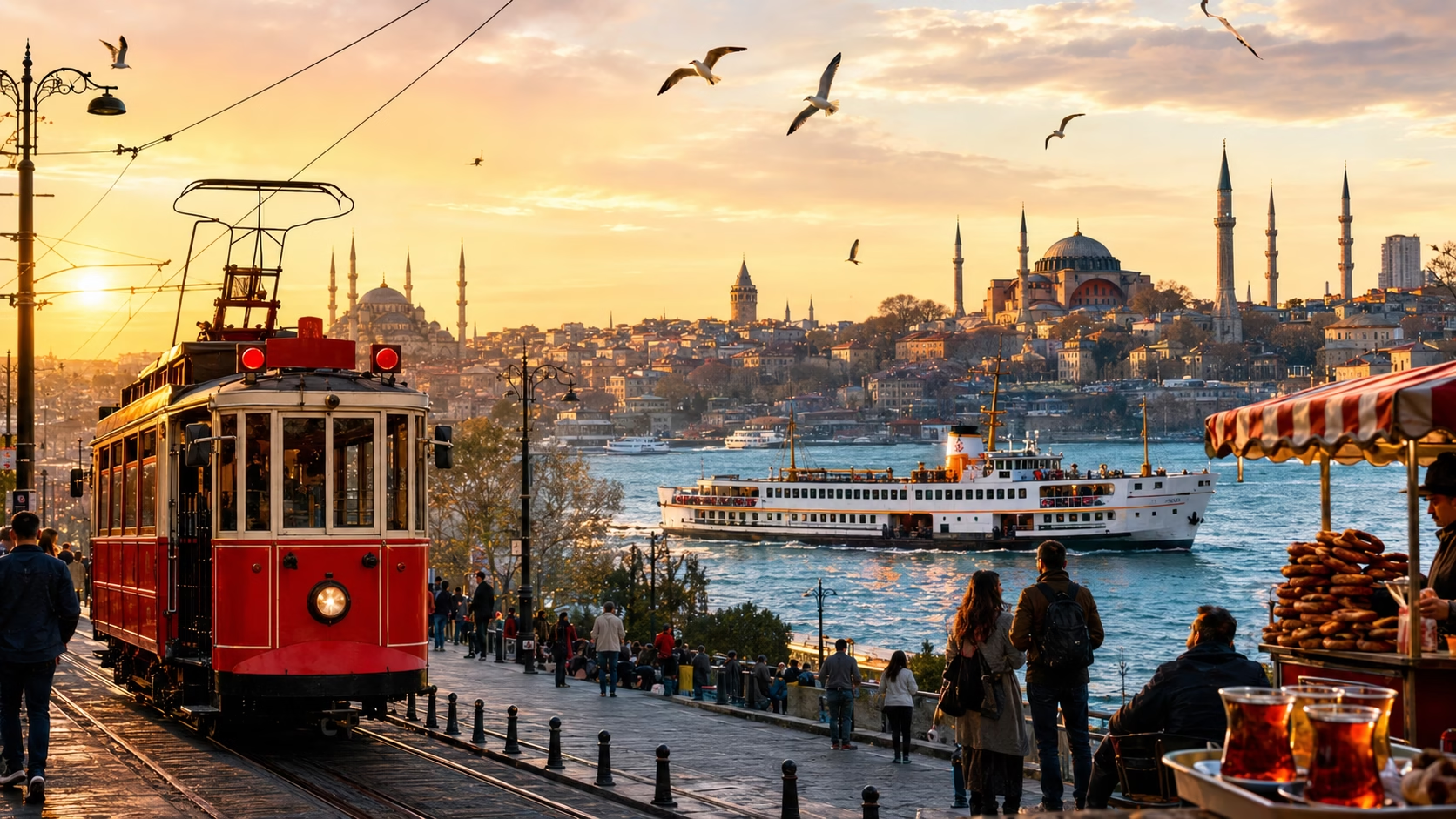
Istanbul Travel Guide • 2026
How to Use Public Transport in Istanbul 7 Easy Tips for Getting Around the City
Wondering how to use public transport in Istanbul without getting lost, stuck in traffic or spending too much on taxis? This guide explains Istanbulkart, the T1 tram, metro lines, Marmaray, ferries and the easiest airport connections for visitors.
Istanbul stretches across Europe and Asia, but its transport network is easier to use than the city map first suggests. Trams, metro lines, Marmaray, ferries, buses and funiculars connect most places a visitor is likely to need — often faster and more predictably than travelling by road.
The key is not to learn every line. Learn a small group of useful routes, keep an Istanbulkart ready, and choose rail or ferry before reaching for a taxi. Once you understand those basics, Istanbul public transport becomes part of the experience rather than a complication.
How to use public transport in Istanbul: 7 easy tips
For repeated journeys, an Istanbulkart keeps metro, tram, bus, Marmaray and many ferry payments in one place.
The T1 is the line many first-time visitors use most because it serves areas around Sultanahmet, Eminönü, the Grand Bazaar and Kabataş.
M2 is useful for Şişhane, Taksim, Şişli, Gayrettepe and Levent, with multiple connections to other lines.
Public ferries are real transport, not just sightseeing. They can be practical for travelling between the European and Asian sides.
Marmaray crosses beneath the Bosphorus and is useful when you want a fast rail connection between the two sides.
Istanbul Airport connects through M11, while Sabiha Gökçen Airport sits directly on the M4 metro line.
Road traffic can be slow. A rail or ferry journey is often easier to estimate and may save both time and stress.
How to use public transport in Istanbul with an Istanbulkart
For visitors making several journeys, Istanbulkart is the most useful transport card to understand. It can be used across a wide range of municipal transport services, including metro, tram, buses and other participating services. Instead of buying a separate ticket before every ride, you load value onto the card and tap it when entering.
Ticket machines are found around major metro stations, tram stops and other transport hubs. The interface is normally straightforward enough for visitors, but always check the screen before confirming a purchase or top-up.
Do not load a large amount simply because you expect to travel often. Add a reasonable balance and top it up again when necessary. That makes it easier to control transport spending during a short visit.
Istanbul public transport fares in 2026
Fares can change, and some services use different pricing structures. Metro Istanbul currently lists the anonymous Istanbulkart full fare at ₺46.20. Airport services, longer-distance systems, Metrobus, Marmaray and certain ferry journeys can be priced differently, so treat the standard fare as a reference point rather than a universal price for every trip.
Current full-fare reference shown by Metro Istanbul. Check the official fare page again close to your trip because transport tariffs can change.
Check the latest ticket prices on Metro Istanbul’s official Tickets and Fares page .
Can you use a bank card instead of Istanbulkart?
Payment options can vary by transport service and gate, so a bank card should not be your only plan. If a contactless payment option is offered, check the fare displayed before tapping and remember that your bank may also apply its own foreign-exchange conditions.
For frequent journeys, Istanbulkart remains a simple choice because it separates transport spending from your normal card and avoids repeatedly depending on your bank’s international payment settings.
Istanbul metro and tram guide for the routes tourists use most
You do not need to memorise Istanbul’s entire rail map. For a normal city break, a handful of lines cover many of the places visitors actually want to reach.
T1 tram: Sultanahmet, Eminönü and the historic centre
The T1 Kabataş–Bağcılar tram is one of the most useful lines for visitors. It serves the historic peninsula and provides connections toward Eminönü, Sultanahmet, the Grand Bazaar area and Kabataş.
M2 metro: Şişhane, Taksim and Levent
M2 is useful when moving through the modern central districts. Şişhane is convenient for Galata, Taksim for the square and İstiklal area, while Gayrettepe also connects with the M11 airport line.
Public ferries: one of the best ways to cross the city
Istanbul ferry transport connects major waterfront districts and gives you the Bosphorus view without needing a sightseeing cruise. Routes from Kadıköy toward Karaköy, Eminönü, Kabataş or Beşiktaş can be useful depending on the timetable.
Marmaray: fast travel beneath the Bosphorus
Marmaray is especially useful when the quickest connection between the European and Asian sides matters more than the view. It also links with other rail services at several major stations.
Funiculars and cable cars: useful shortcuts
The F1 funicular connects Kabataş with Taksim, and other funicular or cable-car lines can save steep uphill walks in specific parts of the city.
Metro Istanbul publishes route details for the T1 Kabataş–Bağcılar Tram Line and its other rail services. For ferry schedules, use Şehir Hatları official timetables .
They are part of everyday Istanbul public transport. On the right route, taking a ferry can be both practical and one of the most memorable parts of the journey.
Istanbul airport public transport: IST and SAW
Istanbul has two major passenger airports, and the correct rail route depends on which airport appears on your ticket.
Istanbul Airport (IST): M11 + city connections
The M11 connects Istanbul Airport with the wider metro network. At Gayrettepe, passengers can connect with the M2 line, which is useful for central districts including Taksim and Şişhane. Depending on your hotel, another M11 connection may be more practical, so check the full route before leaving the airport.
Sabiha Gökçen Airport (SAW): M4 toward Kadıköy
The M4 metro line directly serves Sabiha Gökçen Airport and continues toward Kadıköy. Metro Istanbul also lists a Marmaray connection at Ayrılık Çeşmesi, giving travellers another way to continue across the city.
Metro Istanbul confirms that M2 Gayrettepe connects with the M11 Gayrettepe–Istanbul Airport–Halkalı line. Its official M4 Kadıköy–Sabiha Gökçen Airport page lists Sabiha Gökçen Airport as a station and Ayrılık Çeşmesi as the Marmaray interchange.
How to get around Istanbul without overspending
Public transport solves much of the movement problem, but visitors still need to think about taxis, card payments and tourist-area pricing.
Check the payment terminal before tapping
Cards are widely used around Istanbul, but always read the amount and the currency on the terminal before approving a transaction. If a merchant says the first payment did not work, check your banking notification before paying again.
A multi-currency account can make it easier to see the amount charged in Turkish lira and receive an immediate transaction notification. Compare the plan’s exchange conditions and any ATM fees before relying on it.
Explore Revolut Referral link. Plan limits, exchange conditions and third-party ATM charges may apply.Uber and taxis: confirm the car and the trip
When booking through an app, verify the registration number and make sure the trip remains visible in the app. For a street taxi, confirm that you understand how the fare will be calculated before setting off. Whenever rail or ferry gives you a simple alternative, compare that route first.
The Grand Bazaar is an experience, not a guarantee of low prices
The Grand Bazaar is worth visiting, but the first price offered does not automatically represent the market value of an item. Compare several sellers, confirm the currency and final amount before paying, negotiate calmly and walk away if the transaction feels rushed.
The Medium guide adds more practical observations about traffic, payments, taxis and navigating the city as a visitor.
Read the Istanbul guide on MediumTravel insurance for Istanbul: what to check before departure
Knowing how to use public transport in Istanbul makes the city easier to navigate, but transport planning is only one part of trip preparation. Unexpected illness, hospital treatment, baggage problems, delays or missed connections can still disrupt a city break.
Before purchasing travel insurance, check the destination and any relevant transit countries, the medical benefits and limits, planned activities, exclusions and the emergency-assistance process. Coverage depends on the specific policy selected.
Travel with more confidence
Travel Insurance for Istanbul
Compare available plans, benefits, limits and exclusions before your journey to Turkey.Travel insurance does not normally cover paying too much in a market, choosing an unfavourable exchange rate or a routine disagreement over a taxi fare. Benefits, limits and exclusions depend on the selected policy. Always read the current policy wording before purchasing.
Frequently asked questions about Istanbul public transport
What is the easiest way to use public transport in Istanbul?
For many visitors, the easiest approach is to use an Istanbulkart and focus on the T1 tram, M2 metro, Marmaray and public ferries. The best combination depends on where you stay and what you plan to visit.
How much is a standard Istanbulkart fare in 2026?
Metro Istanbul currently lists the anonymous Istanbulkart full fare as ₺46.20. Some services and distance-based routes use different fares, so check the official price page before travelling.
Which tram should tourists use in Istanbul?
The T1 Kabataş–Bağcılar tram is particularly useful for first-time visitors because it serves central historic areas and connects with several important transport hubs.
What metro goes to Sabiha Gökçen Airport?
Sabiha Gökçen Airport is directly served by the M4 Kadıköy–Sabiha Gökçen Airport metro line. At Ayrılık Çeşmesi, passengers can connect with Marmaray.
How do I reach Istanbul Airport by metro?
Istanbul Airport is served by the M11. Gayrettepe provides a connection between M11 and M2, which can be useful for reaching central districts such as Taksim.
Are public ferries useful for tourists?
Yes. Public ferries are part of Istanbul’s everyday transport network and can be a practical way to move between waterfront districts on the European and Asian sides.
Do I need travel insurance for a trip to Istanbul?
Travel insurance can provide protection for specific covered events such as eligible emergency medical expenses or other insured losses, depending on the policy. Review the terms, limits and exclusions before buying.

Written by Ionut Balan Travel Insurance Specialist and author. Ionut writes practical travel insurance and travel-preparation guides based on policy documentation, official travel information and questions asked by international travellers.
Final advice: make Istanbul’s transport network work for you
The easiest way to learn how to use public transport in Istanbul is to stop thinking about the whole network at once. Start with an Istanbulkart, use the T1 for the historic centre, M2 for Taksim and the modern city, Marmaray when you need a fast cross-Bosphorus rail journey, and public ferries whenever the route makes sense.
Check official timetables and fares close to your travel date, confirm the correct airport route, and use taxis as one option rather than the default. After a few journeys, getting around Istanbul usually feels much simpler than it did on the first day.