
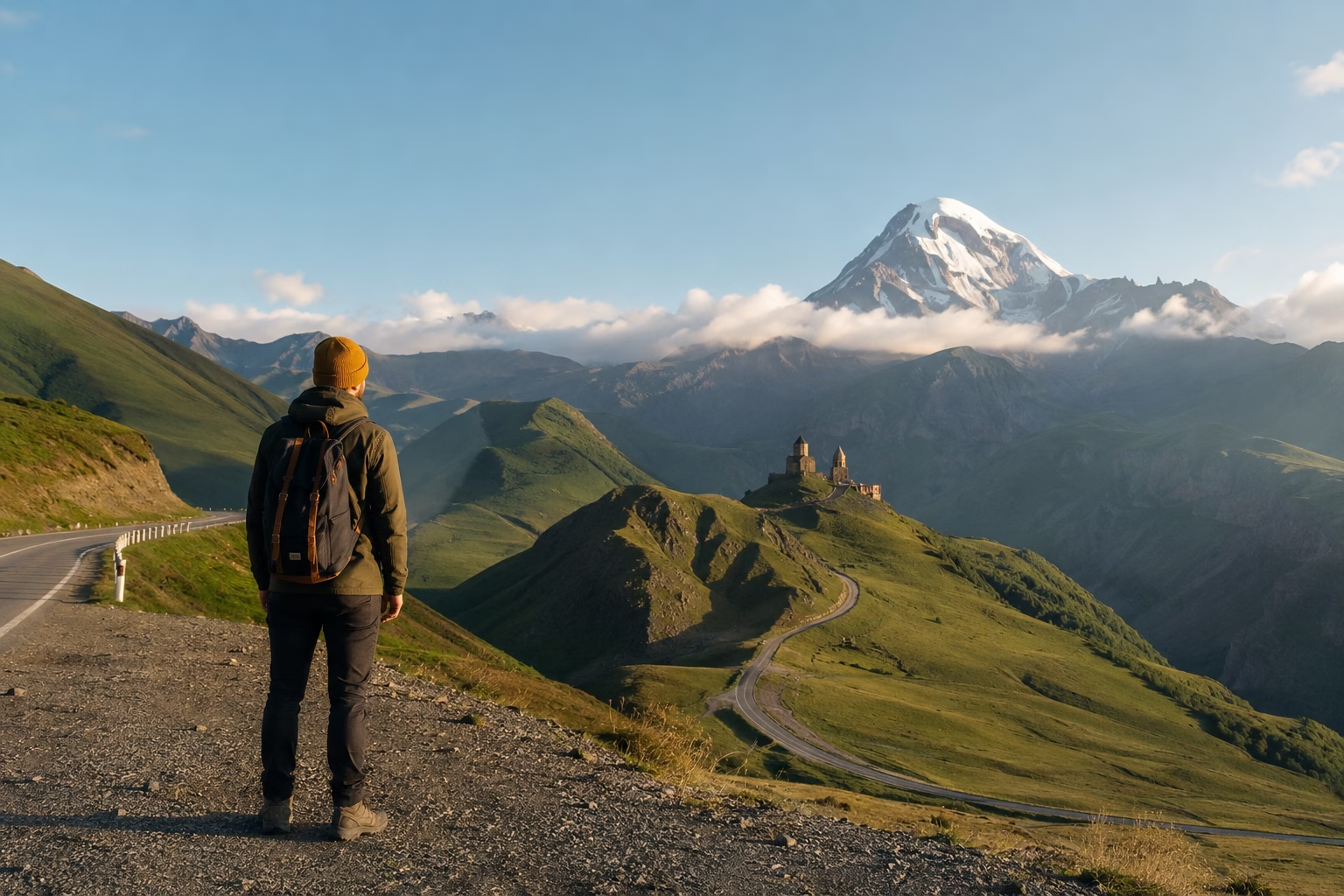
Georgia travel guide • First-time visitors
Georgia Travel Guide 2026What to Know Before You Go
Plan a first trip to Georgia with a practical route through Tbilisi, the Caucasus, wine country and the Black Sea coast. This guide covers when to visit, how to travel, money, safety, local etiquette and the insurance rule introduced in 2026.
This Georgia travel guide 2026 is designed for travellers building their first realistic itinerary. A well-balanced first visit usually combines Tbilisi with one mountain or wine region; add western Georgia or Batumi only when your available time and the season make the longer journey worthwhile.
Georgia fits a remarkable amount into a relatively compact country: sulphur-bath districts and contemporary restaurants in Tbilisi, medieval churches above mountain valleys, family-run wine cellars in Kakheti and a subtropical Black Sea coast. The distances on a map can look modest, but winding roads, altitude and weather mean that moving between regions often takes longer than expected.
The best plan is therefore not the one with the most pins. It is the one that leaves room for a slow meal, a delayed mountain road and an extra stop you did not know about before arriving. Use this page as the central planning guide, then follow the linked route and insurance pages for details that apply to your departure country.
Start with the right Georgia route
For most first-time visitors, Tbilisi is the natural starting point. Georgia’s capital gives you an introduction to the country’s food, history and contrasting architecture, while also providing the widest choice of onward transport. Allow at least two full days rather than treating it as an airport stop.
From Tbilisi, choose one strong regional contrast. Kazbegi and the wider Mtskheta-Mtianeti region suit travellers drawn to dramatic mountain landscapes. Kakheti works well for wine, historic towns and a gentler rural pace. Batumi and Ajara offer the Black Sea, a very different climate and access to western Georgia, but they need more time because they sit on the opposite side of the country.
Official destination information from Georgia Travel is useful for understanding the regions, but build your daily plan using live journey times and local conditions. A road that looks short online may climb through passes or slow substantially in poor weather.
Best for the Old Town, sulphur baths, museums, markets, food and a first look at modern Georgian life. Stay centrally if you want to explore on foot and use the metro.
Explore official Tbilisi informationBest for mountain scenery, Gergeti Trinity Church and walks around Stepantsminda. Conditions change quickly, so keep the route flexible outside summer.
Explore Mtskheta-MtianetiBest for vineyards, traditional qvevri wine, monasteries and small-town landscapes. A guided day trip works, but an overnight stay gives the region more space.
Explore official Kakheti informationBest for the Black Sea, subtropical scenery, Batumi’s boulevard and a base for western Georgia. Expect a more humid climate than in Tbilisi.
Explore official Ajara informationWhen is the best time to visit Georgia?
There is no single best month for every route. Spring and autumn are often comfortable for city touring and lower-altitude regions, while summer gives the widest access to high mountain areas. Winter can be rewarding for snow sports and quieter cities, but some mountain journeys become weather-dependent.
Late spring brings greener landscapes, although rain is possible and high trails may still hold snow. Summer can be hot in Tbilisi and Kakheti, so early starts and shaded breaks matter; mountain temperatures can be much cooler. Early autumn is popular for wine-country trips and generally pleasant touring. In winter, plan around daylight, snow and the possibility of road disruption.
The official tourism board’s seasonal guide to Georgia helps match activities with the time of year. Check the forecast for each region immediately before travel rather than relying on the temperature shown for Tbilisi.
A practical rule: choose the season before the itinerary
A June route and a January route should not be copies of one another. A summer visitor may combine Tbilisi with Kazbegi and hiking, while a winter visitor may need a simpler plan with more buffer time and activities that do not depend on a specific road or trail being open.
If the mountains are the main reason for the journey, avoid fixing every accommodation night before checking seasonal access. If food, wine and culture matter more, a Tbilisi–Kakheti–Mtskheta route is easier to manage and requires less cross-country travel.
Practical note from Ionut: treat a mountain transfer as part of the day, not as an empty gap between two attractions. This creates room for weather, traffic and the roadside stops that often become a memorable part of Georgia.
Sample Georgia itineraries for 5, 7 or 10 days
These routes are starting points rather than rigid schedules. Keep the final night reasonably close to the departure airport, particularly when returning from the mountains or western Georgia.
Tbilisi with one contrast
Spend three nights in Tbilisi and choose either an overnight in Kazbegi or a Kakheti excursion. This is the most realistic short first trip and avoids losing too much time to transfers.
City, wine and mountains
Combine Tbilisi, one night in Kakheti and two nights around Stepantsminda. Adjust the order for the weather and keep one flexible half-day in the capital.
East and west Georgia
Add Kutaisi or Batumi to an eastern Georgia route. Use the train or a domestic flight where suitable, and avoid attempting a long west-to-mountain transfer immediately before departure.
Mtskheta, close to Tbilisi, can work as a half-day or day trip for churches and historic context. Kutaisi is a useful western base for caves, canyons and monasteries, while Batumi deserves more than a quick photo stop if the Black Sea coast is part of the reason for travelling.
Getting around Georgia: metro, trains, marshrutkas and drivers
In Tbilisi, the metro and buses cover much of the city, while walking works well within individual districts. The official Tbilisi Transport Company application provides public transport information. Allow extra time at peak periods and avoid assuming that every attraction described as being in Tbilisi is within easy walking distance.
Intercity trains are useful on selected routes, particularly towards western Georgia. Timetables can change, so consult the Georgian Railway schedule and book through an official channel rather than copying an old timetable from a blog. Shared minibuses, commonly called marshrutkas, reach many towns but may be less predictable for travellers carrying large luggage or working to a tight connection.
A private driver can make sense for mountain or wine-country days, especially for a small group. Agree what the price includes, the route, waiting time and return point before leaving. If renting a car, check licence requirements, insurance, road conditions and parking. Mountain driving demands more care than the distance alone suggests, and alcohol should never be combined with driving.
Money, cards and cash in Georgia
Georgia’s currency is the Georgian lari, abbreviated GEL. Cards are widely useful in Tbilisi, Batumi, hotels and larger businesses, but cash remains practical for markets, small guesthouses, rural stops and some local transport. Carry a modest backup amount rather than relying on a single card or wallet.
When an ATM or terminal offers to convert the purchase into your home currency, compare the rate and charges before accepting. Your bank may apply foreign transaction or cash-withdrawal fees. Exchange money only at transparent, authorised businesses, count it before leaving and keep the receipt when provided. The National Bank of Georgia publishes an official exchange rate, but notes that it is indicative rather than a guaranteed retail rate.
Keep a second payment method separate from your main wallet and do not let a card disappear from view unnecessarily. Before departure, check whether your bank needs travel notification, whether online payments require an OTP and how to freeze a lost card from its app.
Internet access and useful travel apps
Wi-Fi is common in urban accommodation and restaurants, while a local SIM or suitable eSIM can make navigation and transport easier. Check whether your phone is unlocked and compare roaming costs before arrival. Coverage may weaken in remote valleys, so download essential maps and booking details for offline use.
Save the address of your accommodation in Georgian as well as English, particularly when heading beyond central tourist areas. Keep screenshots of transport tickets and reservations, but also retain access to the original booking. A translation application can help with menus and simple questions, while an offline map is valuable when a mountain route loses signal.
Georgia’s emergency number is 112 for police, ambulance and fire services. The official 112 service operates around the clock, and its mobile application includes emergency communication features. Save the number before travelling, along with your accommodation and insurer or assistance contact details.
Food, wine and Georgian hospitality
Food is not a side activity in Georgia; it is one of the clearest ways to understand the country. Khachapuri varies by region, khinkali come with their own eating technique, and vegetable, walnut, herb and bean dishes make a meal much broader than the best-known classics suggest.
A traditional supra is a structured feast led by a toastmaster, or tamada. Guests are not expected to understand every custom immediately, but listening, accepting hospitality graciously and not rushing the meal go a long way. Wine may be offered generously. You can participate without matching every toast, and it is acceptable to pace yourself or decline alcohol politely.
Ask before photographing people, religious ceremonies or private homes. Dress respectfully when visiting churches and follow any entrance instructions. In markets, a few Georgian greetings are appreciated, but friendliness should not be confused with permission to photograph someone or their stall.
Safety and regional travel advice
Safety decisions should be based on the precise region, activity and current conditions rather than a broad label applied to the whole country. In cities, use the same precautions you would elsewhere: protect valuables in busy places, use reputable transport, avoid isolated areas late at night and keep drinks in sight.
Mountain activities add different risks. Check the weather, trail level, daylight and whether a local guide is appropriate. Do not treat a social-media viewpoint as an easy walk without understanding the terrain. Tell someone your route and expected return, especially where mobile coverage is unreliable.
Some areas require particular caution. Current UK government advice, for example, advises against all travel to the breakaway regions of South Ossetia and Abkhazia and against all but essential travel near their administrative boundary lines. Travellers should read the latest regional advice for Georgia and the current advice issued by their own government before departure. Conditions and official guidance can change.
Entry documents and Georgia’s 2026 insurance requirement
Passport, visa and permitted-stay rules depend on nationality and individual circumstances, so check Georgia’s official consular information rather than assuming another traveller’s situation applies to you.
From 1 January 2026, tourists entering Georgia are generally required to hold health and accident insurance valid for the full period of their stay. Official Georgian consular information states that the policy should provide at least GEL 30,000 of cover and may be presented electronically or on paper in English or Georgian. Limited exemptions may apply.
Read our dedicated Georgia travel insurance requirements page for a focused explanation, but verify the latest position through Georgia’s official consular announcement before travelling. Border authorities, not a blog or insurer, determine whether a traveller meets entry conditions.
What to check before choosing travel insurance
A certificate that satisfies an entry rule is only one part of the decision. The policy should also make sense for your route, planned activities, health and total trip cost. Read the wording rather than relying on the product name.
- Georgia is included for the complete travel period
- Medical and accident limits meet the entry requirement
- Emergency assistance and repatriation terms are understood
- Hiking, skiing or other activities are covered where required
- Pre-existing medical condition rules have been checked
- Exclusions, excesses, evidence and claim procedures are clear
Our guide to what travel insurance plans may cover explains common benefit categories and limitations. Actual cover always depends on the chosen policy wording, eligibility, limits and exclusions.
If you are ready to compare an available option, you can request a travel insurance quote online. Enter the correct departure country, all destinations and the complete travel dates. Review the policy documentation before paying.
AnyTravel Insurance provides general travel insurance information and may introduce users to third-party insurance services. Any insurance product is subject to the provider’s eligibility criteria, policy wording, exclusions, limits and terms. AnyTravel Insurance does not underwrite policies or decide claims.
Georgia travel planning from the Gulf
Georgia is a popular short-break destination for travellers departing from Gulf countries, but the departure-country details and policy eligibility must be entered accurately. These route guides explain the practical insurance questions for several common starting points.
Common mistakes on a first trip to Georgia
Trying to cover the entire country in one week. Tbilisi, Kazbegi, Kakheti, Kutaisi and Batumi may fit on a map, but combining all of them can turn the trip into a sequence of transfers. Choose depth over a checklist.
Planning mountain days without a backup. A low-cloud or stormy day can change both the view and the road. Keep an alternative city or food-focused activity available and avoid placing the most weather-sensitive trip immediately before your flight.
Depending entirely on cards or entirely on cash. Use a mix. A card is convenient in cities, while cash helps with smaller rural purchases. Keep them in separate places and know how to contact your bank.
Buying the first policy without reading it. Entry compliance does not automatically mean every planned activity is insured. Check hiking, winter sports, rental-car excess, health declarations and territorial limits as relevant.
Using outdated screenshots as official guidance. Train times, entry rules and travel advice can change. Recheck the original source shortly before travelling.
Georgia pre-departure checklist
Use this final check a few days before the journey, then repeat the time-sensitive items on the day of departure.
- Passport validity, visa status and permitted stay verified
- Insurance certificate saved offline and available in English or Georgian
- Accommodation and first transfer confirmed
- Live weather and regional travel advice reviewed
- Bank cards, GEL cash and a backup payment method prepared
- 112, accommodation and assistance numbers saved
- Offline maps, tickets and essential documents downloaded
- Extra time allowed before the return flight
Build a Georgia trip with room to experience it
A strong first itinerary does not need to include every celebrated region. Tbilisi plus the mountains, or Tbilisi plus Kakheti, can reveal far more than a rushed loop across the country. With additional days, western Georgia and the Black Sea become realistic rather than exhausting additions.
Choose the season first, respect travel times, verify current entry and regional advice, then leave a little space for Georgia’s long meals and unexpected stops. That flexibility is not lost time; it is often the part of the trip you remember.
Frequently asked questions
Quick answers to common questions from travellers preparing a first visit to Georgia.
How many days do you need for a first trip to Georgia?
Five days can cover Tbilisi and one nearby region, while seven days allow a more comfortable combination of the capital, Kakheti or Kazbegi. Around ten days makes it more realistic to add western Georgia or Batumi without spending most of the trip in transit.
What is the best month to visit Georgia?
The best month depends on the route. Late spring and early autumn often suit city and cultural trips, summer offers broader access to high mountain areas, and winter is relevant for snow sports. Always check regional conditions because Tbilisi, the Caucasus and the Black Sea coast can have very different weather.
Can you use cards in Georgia?
Cards are commonly accepted in major cities, hotels and larger businesses, but cash is still useful for markets, rural guesthouses, small shops and some transport. Carry a backup payment method and check your bank’s foreign-use and ATM charges.
Is Tbilisi a good base for a first visit?
Yes. Tbilisi is the main transport and cultural hub and works well for trips to Mtskheta, Kakheti and, with a longer journey, Kazbegi. However, overnight stays outside the capital provide a slower experience and reduce the pressure of returning late.
Do tourists need travel insurance for Georgia in 2026?
Tourists entering Georgia are generally required from 1 January 2026 to hold health and accident insurance valid for the full stay, with at least GEL 30,000 of cover. Check the latest official consular information because exemptions and implementation details may apply to individual circumstances.
What is the emergency number in Georgia?
Call 112 for police, ambulance or fire services. The service operates 24 hours a day. Save the number before travelling and keep your accommodation and emergency-assistance details available offline.
Is it better to visit Kazbegi or Kakheti?
Choose Kazbegi for high-mountain scenery and walking, subject to weather and road conditions. Choose Kakheti for wine culture, monasteries and a gentler rural itinerary. With a week, many travellers can include both without rushing.
Should you rent a car in Georgia?
A rental car gives flexibility, but it is not essential for a first trip. Trains, local transport, tours and private drivers can cover many common routes. Rent only after checking licence rules, road conditions, parking, insurance and your confidence on mountain roads.
Official sources used for this guide
Travel conditions, schedules and entry requirements can change. The following primary and official sources were reviewed on 29 August 2026:
- Georgia Travel — destinations, regions, seasons and trip-planning information.
- Georgia GeoConsul — official information on the compulsory insurance requirement.
- Georgian Railway and Tbilisi Transport Company — live transport planning.
- National Bank of Georgia — currency and official indicative exchange rates.
- Georgia 112 — official emergency-service information.
- UK Foreign, Commonwealth & Development Office — current travel and regional risk advice.

Written by Ionut BalanTravel Insurance Specialist and author. Ionut writes practical travel insurance and travel-preparation guides based on policy documentation, official travel information and questions asked by international travellers.